

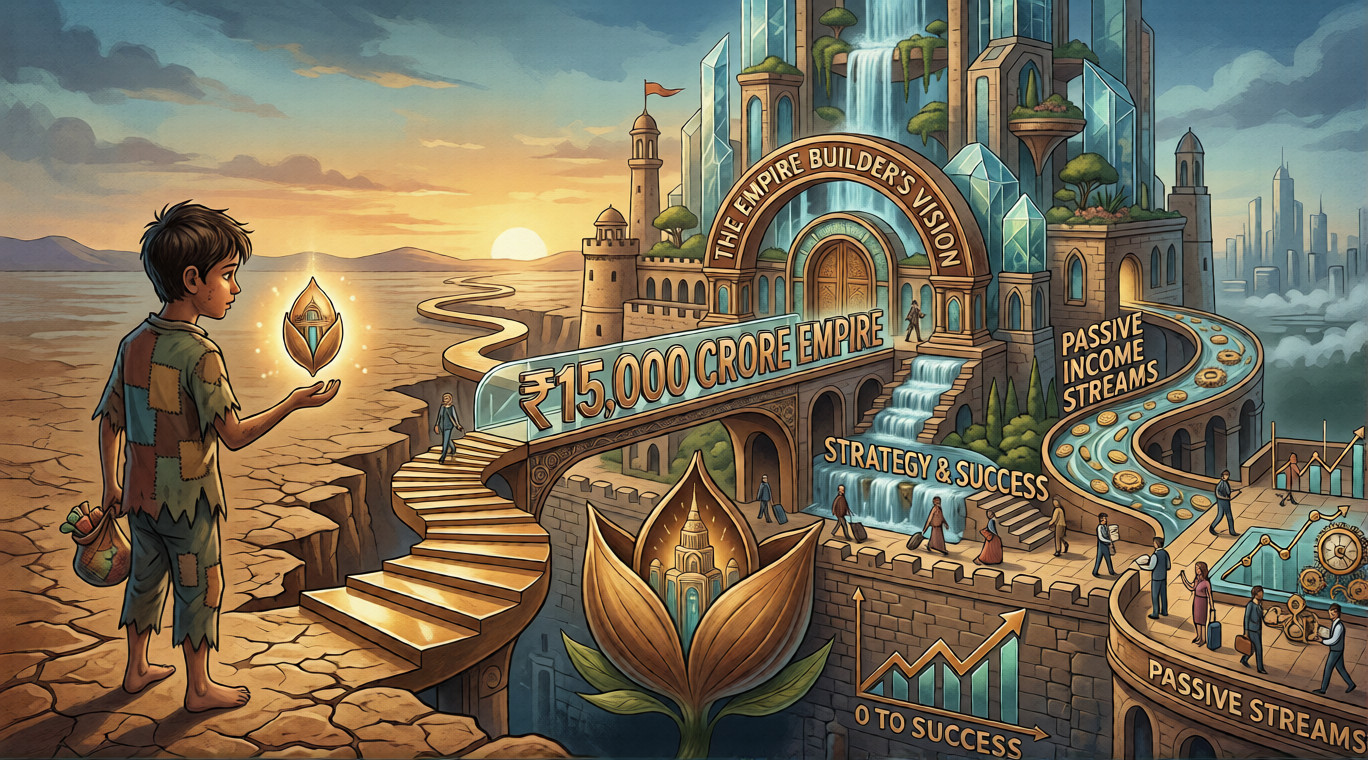
There was once a boy who grew up where dreams were considered a luxury. He wasn’t born into comfort. No grand house, no polished shoes, no family business waiting patiently for him to inherit. Just a small, noisy home, where every rupee mattered and every meal was earned with effort. While others spoke of ambitions, he spoke of survival.
But here’s the thing about hunger—it doesn’t just live in the stomach. Sometimes, it burns quietly in the mind.
As a young lad, he took up whatever work came his way. Cleaning tables, carrying luggage, standing for hours in places where others stayed for comfort. He observed more than he spoke. He noticed how guests were treated, how smiles could change moods, how service—when done right—felt almost like magic.
While others saw a job, he saw a system.
He began to understand something rather profound: people weren’t just paying for a room—they were paying for how that room made them feel.
Years passed. He saved obsessively. Not for luxury, but for a chance. A tiny opportunity came—a modest property, barely worth noticing. Most would have dismissed it. He saw it as his first chapter.
He didn’t build a hotel. He built an experience.
The sheets were cleaner, the staff kinder, the welcome warmer. He trained people not just to serve, but to care. Slowly, word spread. Not through advertisements, but through conversations—one satisfied guest telling another.
What followed wasn’t explosive success. It was something far rarer—steady, disciplined growth.
He reinvested everything. Expanded cautiously. Learned constantly. Failed occasionally—but never publicly enough for anyone to notice. Each new hotel carried the same philosophy: affordability without compromise, luxury without arrogance.
While competitors chased glamour, he focused on consistency.
Then came the turning point.
He embraced a model others underestimated—standardisation at scale. Whether you stayed in a bustling city or a quiet town, the experience remained familiar. Predictable. Reliable. In a world full of uncertainty, that became his biggest strength.
Investors began to take notice. Customers became loyalists. Employees became believers.
Years later, that poor boy—once wiping tables—was now leading a hospitality empire worth ₹15,000 crore.
Yet, if you met him, you wouldn’t find extravagance. You’d find simplicity. Perhaps the same quiet observation in his eyes. The same understanding that success isn’t built overnight—it’s built daily, in small, unnoticed decisions.
The lesson? : Great empires aren’t always born from privilege. Sometimes, they rise from patience, sharp observation, and an unshakable belief that even the smallest beginnings can lead to something extraordinary. And perhaps the most powerful truth of all, he never stopped thinking like that poor boy.