

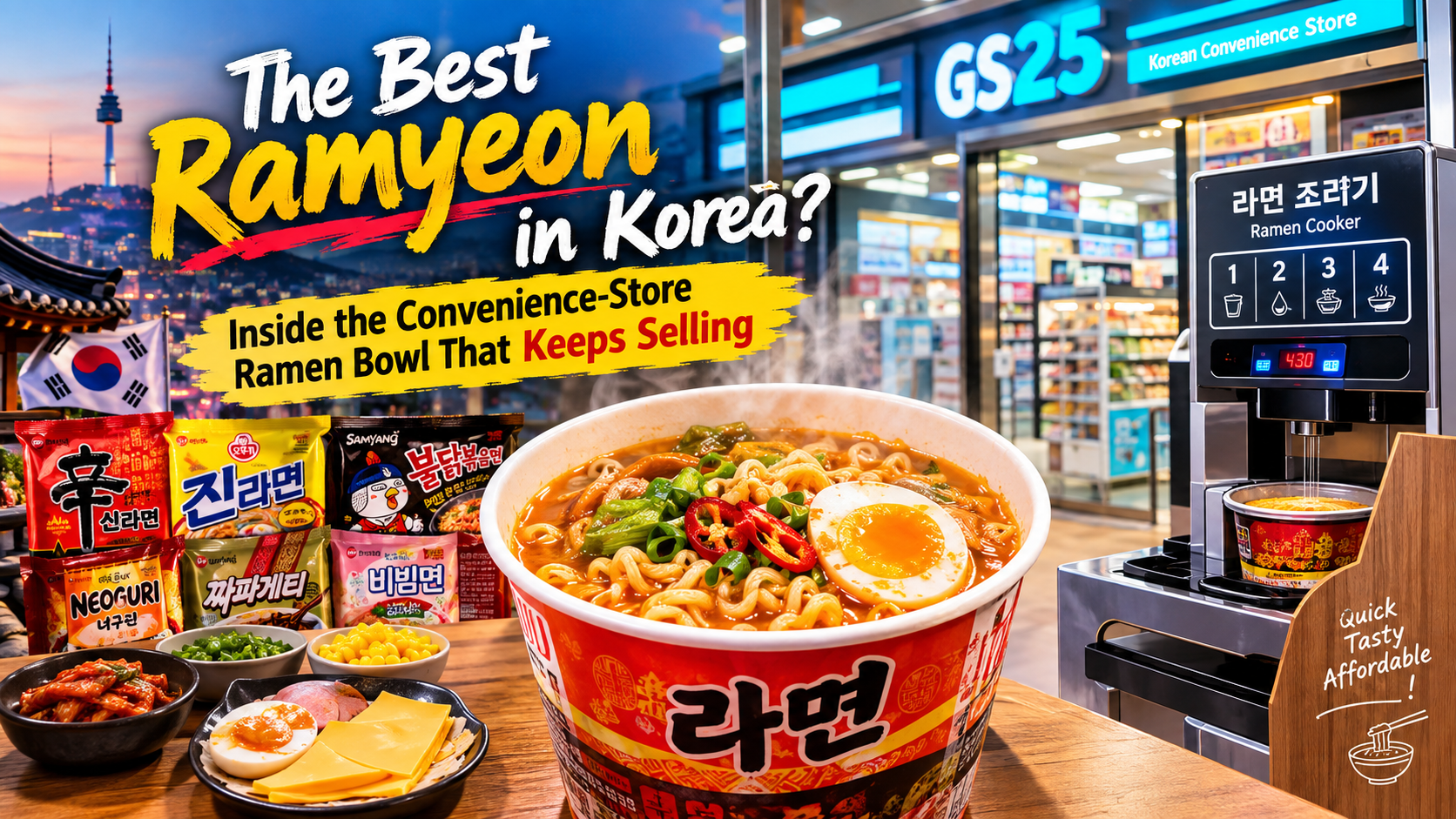
If you think Korean convenience-store ramen is simply a packet of noodles dropped into boiling water, think again. In South Korea, Ramyeon (라면) has become a food culture of its own — quick, affordable, customisable and deeply connected with everyday life.
There is even a fascinating convenience-store phenomenon behind the bowls that reportedly move hundreds of servings a day. Rather than treating the number as a universal sales figure, it is better understood as a sign of just how powerful the convenience-store ramyeon culture can be and the really interesting part is how the whole system works.
What Exactly Is Korean Ramyeon?: In Korea, ramyeon generally refers to Korean-style instant noodles. Although the word is related to Japanese ramen, the Korean version developed its own identity.
The typical packet contains:
- A dried noodle block.
- A soup or seasoning powder.
- Dried vegetables or other ingredients.
- Sometimes a separate sauce or oil sachet.
The noodles are designed to cook quickly while retaining their characteristic springy texture.
Korean ramyeon can be found everywhere — homes, university dormitories, restaurants, supermarkets and, particularly importantly, convenience stores.
Korea’s official tourism and government information also describes convenience stores as places where ramyeon can be cooked instantly and customised with toppings.
How Does Convenience-Store Ramyeon Work?: This is where the experience becomes different from simply making noodles at home. Walk into a Korean convenience store and you may find a dedicated ramyeon cooking machine.
The basic process is remarkably simple:
1. Choose your noodles
- You pick a cup or packet of ramyeon from the shelves.
- The choice can be surprisingly difficult because Korean shops carry a huge range of flavours.
2. Add the noodles
- Depending on the machine and product, the noodles and seasoning are placed into the cooking container.
3. The machine heats the water
- The convenience-store machine supplies precisely heated water and cooks the noodles automatically.
- Some modern machines use programmed cooking cycles designed around particular noodle products.
4. Wait a few minutes
- This is the hardest part.
- The noodles soften, the seasoning dissolves and the broth becomes intensely aromatic.
5. Add toppings
- This is where a basic packet can become a proper Korean-style snack.
Popular additions include:
- 🥚 Egg
- 🧀 Cheese
- 🥬 Kimchi
- 🥟 Mandu dumplings
- 🌭 Sausage
- 🥓 Spam
- 🌱 Spring onions
- 🍥 Fish cake
- 🍚 Rice
Korea’s official food information specifically highlights combinations such as kimchi, egg, cheese, rice cakes, dumplings and Spam.
Why Can a Convenience Store Sell So Much Ramyeon?: The secret isn’t just the noodles. It’s the combination of speed, price, location and experience. A convenience store in Korea isn’t always somewhere you simply buy a drink and leave. It can function as a tiny late-night dining room.
You can: Choose → cook → customise → sit → eat → leave. There is no conventional restaurant kitchen, waiter or lengthy preparation.
That makes ramyeon particularly attractive to:
- Students.
- Office workers.
- Travellers.
- Night-shift workers.
- Teenagers.
- Late-night diners.
- People wanting an inexpensive meal.
Ramyeon is also strongly associated with yasik, or late-night eating, in Korean food culture. Korea.net
So when a popular location reportedly sells hundreds of bowls in a day, the impressive figure makes more sense. The product is engineered for high-volume, rapid service.
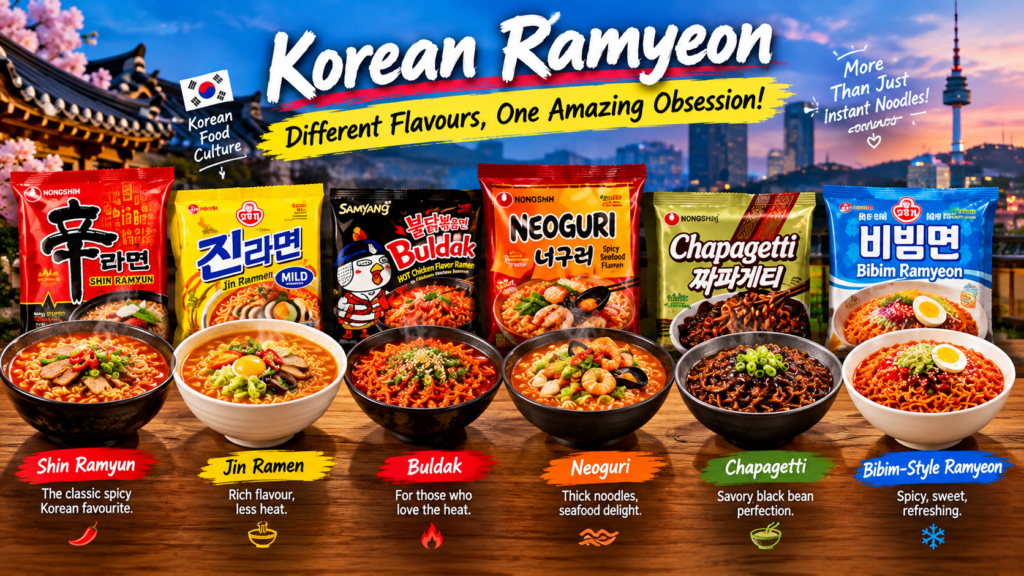
The Big Ramyeon Types You Should Know: The Korean ramyeon aisle can look chaotic to a first-time visitor. But there is an easy way to understand it. Think of the market in terms of broth, sauce, seafood, black bean and speciality flavours.
1. Shin Ramyun — The Classic: Nongshim’s Shin Ramyun is probably the name most international visitors associate with Korean instant noodles. It delivers a spicy, savoury broth with garlic, chilli and mushroom notes, together with springy noodles. It is the obvious starting point if you want to understand what classic Korean ramyeon tastes like.
Best for: First-timers who want the classic Korean experience.
2. Jin Ramen — The Gentler Introduction: Ottogi Jin Ramen comes in different versions, including mild and spicy options. The mild version is particularly useful if you want Korean ramyeon without immediately jumping into serious chilli heat.
Best for: Beginners and people who prefer a gentler bowl.
3. Buldak — The Fire Noodle: Then there is Samyang Buldak. This isn’t really about a traditional bowl of soup. Buldak is generally prepared by cooking the noodles, draining most of the water and mixing them with a concentrated sauce. That produces an intensely flavoured, fiery noodle dish rather than a conventional noodle soup.
The range now includes flavours such as:
- Original Hot Chicken.
- Carbonara.
- Cheese.
- 2X Spicy.
- Other limited and specialty versions.
Best for: Chilli lovers and anyone looking for the famous Korean “fire noodle” experience.
4. Neoguri — Thick Noodles and Seafood: Neoguri is particularly distinctive because its noodles are thicker and more udon-like. Its flavour leans towards spicy seafood, and the product is also famous for being one of the components used in jjapaguri.
Best for: People who enjoy thick noodles and seafood flavours. Daebak
5. Chapagetti — The Black-Bean Alternative: If red chilli broth isn’t your thing, try Chapagetti. Instead of a conventional soup, it takes inspiration from Korean jajangmyeon, producing a savoury black-bean-style noodle dish. It is also one half of the famous jjapaguri combination when mixed with Neoguri — a dish that gained worldwide attention through the film Parasite.
Best for: People who prefer savoury, rich noodles without a fiery soup.
6. Bibim-Style Ramyeon — No Soup Required: Another major category is bibim or mixed noodles. These are cooked, drained and coated in sauce. They can be sweet, spicy, tangy or a combination of all three. Some varieties are especially popular during warmer weather because they can be served chilled.
Best for: People who want something refreshing, spicy and sauce-coated rather than soupy.
Soup vs Stir-Fry: The Most Important Difference: This is the detail many newcomers get wrong. Not every Korean ramyeon is supposed to be eaten as soup.
🍲 Soup-style: The seasoning is dissolved into cooking water and becomes the broth. Examples include: Shin Ramyun → Jin Ramen → Neoguri.
🍝 Sauce-style: The noodles are cooked first, much of the water is removed, and then a concentrated sauce is mixed through. Examples include: Buldak → Chapagetti → Bibim noodles.
This distinction completely changes the eating experience.
How Koreans Upgrade Their Ramyeon: Here’s where the humble packet becomes something much more interesting.
1. The Egg:
- Crack an egg into the pot near the end.
- Leave it alone and you get a soft poached-style egg.
- Stir it through and you create silky egg ribbons throughout the broth.
2. Kimchi:
- Kimchi adds acidity, fermentation and crunch.
- It is one of the simplest ways to make a basic bowl taste considerably more complex.
3. Cheese:
- A slice of cheese can transform a spicy bowl into something creamy and mellow.
- This is especially popular with spicy varieties.
4. Dumplings:
- Drop a few mandu into the pot and suddenly your quick noodle snack becomes a much heavier meal.
5. Spam:
- Add Spam and you move towards the flavours associated with budae-jjigae, or Korean army stew.
6. Rice Cakes:
- Tteok gives the bowl a chewy texture and makes it more filling.
These kinds of combinations aren’t just internet food hacks; they are part of Korea’s established ramyeon culture.
Why Korean Convenience-Store Ramyeon Feels Different?: Perhaps the biggest attraction of Korean ramyeon isn’t just the noodles themselves, but the entire experience. Imagine finishing a long day in Seoul, stepping into a brightly lit convenience store, choosing your favourite ramyeon and placing it into a cooking machine. Within minutes, steam rises from your bowl as you add an egg or cheese, grab some kimchi and settle down to eat.
Outside, Seoul continues to buzz with activity, while inside, you can enjoy a hot, affordable bowl of noodles with hardly any waiting. This simple yet satisfying experience explains why ramyeon has become far more than emergency food — it is fast food, comfort food, social food and an essential part of South Korea’s convenience-store culture, all rolled into one.
So, Which Korean Ramyeon Is Actually the Best?: There isn’t one universal winner. It depends on what you want.
| If you want… | Try… |
| Classic spicy soup | Shin Ramyun |
| Mild introduction | Jin Ramen Mild |
| Serious chilli | Buldak |
| Creamy spicy noodles | Buldak Carbonara |
| Thick seafood noodles | Neoguri |
| Black-bean flavour | Chapagetti |
| Sweet-spicy mixed noodles | Bibim-style ramyeon |
| A huge customised meal | Convenience-store ramyeon + toppings |
Current guides similarly distinguish the major products by whether they’re broth-based, dry/stir-fried, mild, seafood-focused or intensely spicy.
The Real Secret Behind 🇰🇷 Korea’s Ramyeon Obsession: The fascinating thing about Korean ramyeon isn’t that it can be cooked in four or five minutes. It’s that those few minutes have become part of Korean food culture. The noodle packet is only the starting point.
The real experience comes from choosing the flavour, controlling the cooking, adding your own toppings and deciding whether you want a steaming bowl of broth or intensely concentrated sauce-coated noodles. And that’s why the Korean convenience store ramyeon experience has become such a popular attraction for visitors.
It isn’t simply instant noodles. It’s a tiny, customisable Korean meal — prepared in minutes, eaten fresh and enjoyed almost anywhere.
For a first visit, start with Shin Ramyun if you want the classic experience, or Jin Ramen Mild if you’re cautious about spice. If you’re feeling adventurous, save Buldak for the moment when you’re ready to understand why Korean “fire noodles” have become a global phenomenon.