

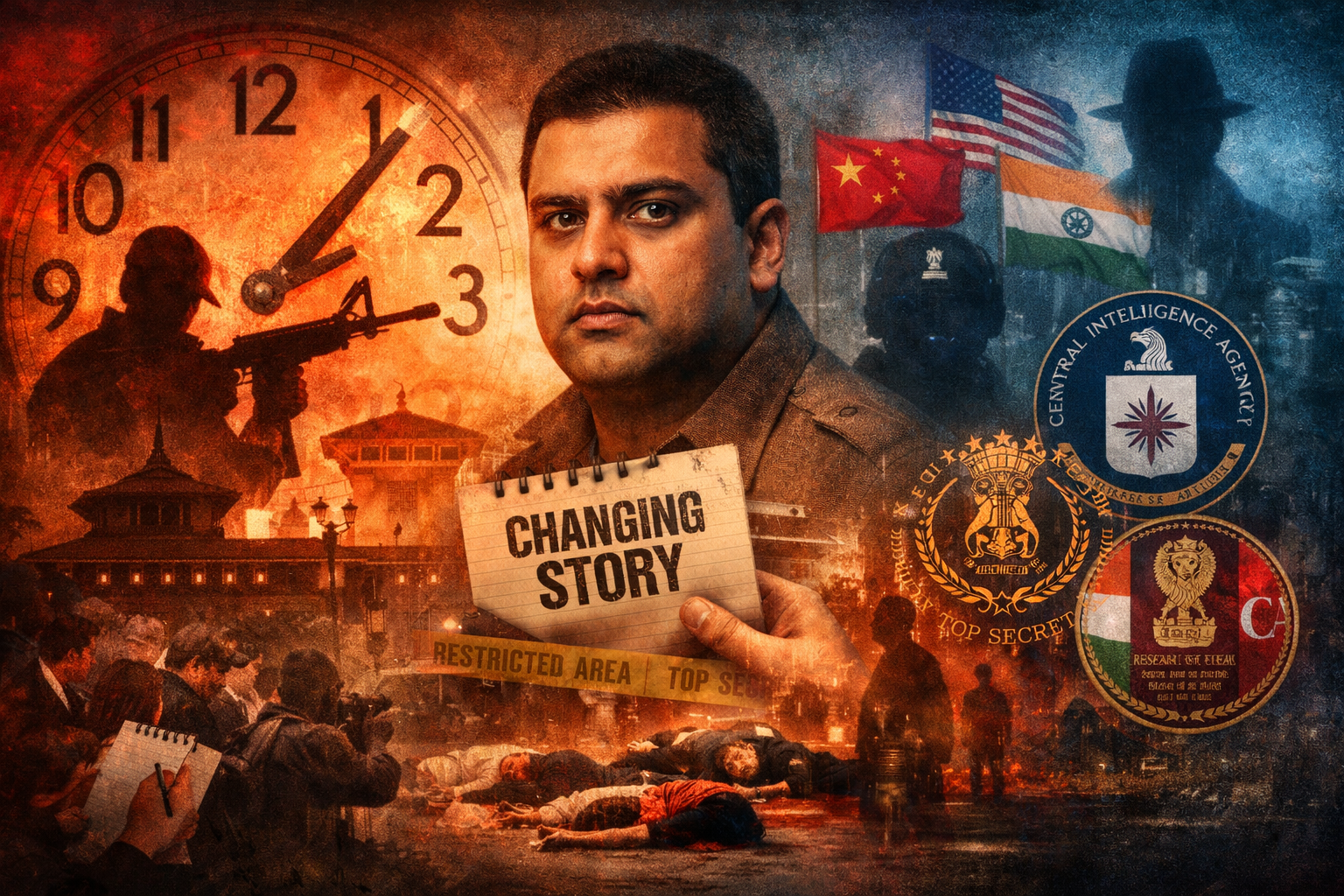
1️⃣ The “9 Mysterious Minutes” During the Shooting: On the evening of 1 June 2001, the royal family of Nepal gathered inside the magnificent halls of Narayanhiti Palace for their regular Friday dinner meeting. The palace, home to the beloved king King Birendra, was known for its tight security and quiet royal traditions. That night, however, history would take a dark and mysterious turn. Among the guests was the crown prince, Dipendra Bir Bikram Shah Dev. Witnesses later said he appeared heavily intoxicated and was escorted out of the gathering room. For nearly nine mysterious minutes, the hall remained calm, conversations continued, and no one suspected the horror that was about to unfold.
The massacre happened during a royal family gathering at Narayanhiti Palace on 1 June 2001. Witness accounts suggest something unusual:
- Dipendra Bir Bikram Shah Dev first appeared intoxicated and was escorted out of the room.
- Around 9–10 minutes later, he returned carrying weapons.
- The shooting began.
Questions people still ask:
- Where did he get multiple weapons so quickly?
- Why didn’t palace guards intervene?
- Why was the royal residence security so ineffective?
Critics argue that the timeline was never clearly reconstructed.
2️⃣ Weapons Used in the Attack: Suddenly, Dipendra returned — but this time carrying multiple weapons. Reports later claimed he used an M16 rifle, an MP5 submachine gun, and a shotgun. Within moments, chaos erupted in the royal dining hall. Gunfire echoed through the palace as members of the royal family fell one after another. The attack killed several of Nepal’s most important figures, including King Birendra and Queen Aishwarya. Witnesses struggled to understand how one person could move through the room switching weapons during the confusion. The strange timeline — especially how Dipendra obtained several weapons so quickly — would later become one of the biggest unanswered questions surrounding the tragedy.
Reports say Dipendra used:
- M16 Rifle.
- MP5 Submachine Gun.
- Shotgun.
The complexity raises questions because:
- Switching between several weapons during chaos would be difficult.
- witnesses gave different descriptions of the weapons
This created doubts about whether one person could have done everything.
3️⃣ The Survivor Who Changed His Story: Another detail that continues to raise questions involves the survivors and how their stories changed over time. One of the most notable survivors was Paras Shah, the son of Gyanendra Shah. He was present inside Narayanhiti Palace during the tragic night of 1 June 2001. In the immediate aftermath of the massacre, rumors spread that some early accounts from survivors did not completely match the official explanation later released to the public. Journalists and investigators claimed that the initial descriptions of what happened inside the royal gathering room seemed slightly different from the final version presented by the government investigation.
However, the palace placed very strict control over information after the tragedy. Survivors were rarely interviewed publicly, and the details coming from inside the palace were limited. Because of this tight control, many Nepalis felt that the full stories of those who witnessed the event firsthand were never completely heard. This lack of open testimony added another layer of mystery to the massacre and fueled public speculation about what truly happened during those chaotic moments inside the royal residence.
One of the survivors was Prince Paras, the son of Gyanendra Shah. Some journalists claim:
- Early accounts from survivors were different from later official statements.
- Survivors were rarely publicly interviewed.
However, the palace tightly controlled information after the massacre.
4️⃣ The Strange Behavior of Security Forces: Even more puzzling was the response of palace security. The palace had strong guards because the king himself was present, yet during the massacre many reports suggested that security forces did not immediately enter the room. The delay in emergency response shocked the nation. Survivors were rarely allowed to speak publicly, and information from inside the palace was tightly controlled. One of the surviving royals was Paras Shah, the son of Gyanendra Shah. Some journalists later claimed that early survivor accounts differed from the official story released afterward, which only deepened public suspicion.
The palace had strong security because King Birendra was inside. Yet during the massacre:
- Guards reportedly did not immediately enter.
- Emergency response was slow.
Critics argue that the security failure was never fully explained.
5️⃣ The Marriage Conflict: According to the official investigation, the tragedy was connected to Crown Prince Dipendra’s desire to marry Devayani Rana. Her family belonged to the powerful Rana dynasty, historically linked with Nepal’s political elite. Reports suggested that Dipendra’s mother, Queen Aishwarya, strongly opposed the marriage. The disagreement reportedly created severe tension inside the royal family, and investigators concluded that this conflict contributed to Dipendra’s violent actions. Yet many Nepalis struggled to believe that a family dispute alone could explain such a devastating event.
A central part of the official explanation involves Dipendra’s relationship with Devayani Rana.Her family belonged to the powerful Rana dynasty, historically linked to Nepal’s ruling elites. According to reports:
- Dipendra wanted to marry Devayani.
- Queen Aishwarya strongly opposed it.
- The disagreement caused severe tension in the Royal Family.
This dispute allegedly triggered the tragedy.
6️⃣ The Foreign Intelligence Theory 🌍: As rumors spread across the country, various conspiracy theories began to circulate. Some people speculated that foreign intelligence agencies from neighboring countries such as India or China — or even the United States — might have been involved because of Nepal’s strategic location between powerful nations. However, historians and investigators have never found credible evidence supporting these theories. Despite this, the lack of clear answers left many citizens questioning what truly happened that night.
One of the most controversial conspiracy theories claims foreign intelligence agencies might have been involved. Different versions blame:
- India.
- China.
- Even the United States.
The idea behind this Theory: Nepal was strategically located between India and China, and political shifts could affect regional power balance. However: ⚠️ No credible evidence has ever proven foreign involvement. Most historians consider this unlikely but widely discussed.
7️⃣ Why Many Nepalis Suspected a Palace Conspiracy : After the massacre, Crown Prince Dipendra was declared king while in a coma, but he died a few days later. The throne then passed to his uncle, King Gyanendra. For many Nepalis, this sudden shift of power created suspicion about internal palace politics, although no evidence has ever proven a conspiracy. What is certain is that the tragedy deeply shook the nation and permanently damaged the public’s trust in the monarchy.
After the deaths of King Birendra and most of the royal family, the throne passed to Gyanendra Shah. Some people suspected:
- Internal Power Struggles.
- Political Motives.
But again, no evidence proving this has ever been found.
8️⃣ The End of Nepal’s Monarchy : In the years that followed, Nepal entered a period of intense political change. The Maoist insurgency grew stronger, protests spread, and the authority of the monarchy continued to decline. Finally, in 2008, Nepal officially abolished the monarchy and became the Federal Democratic Republic of Nepal, ending centuries of royal rule.
The tragedy destroyed public trust in the monarchy. During the following years:
- Political unrest increased.
- Nepalese Civil War intensified.
- Finally, in 2008, Nepal abolished the Monarchy and became a Republic.
9️⃣ The Palace Today: The place where the tragedy occurred — Narayanhiti Palace — has been transformed into a museum. Visitors walk through silent halls, royal meeting rooms, and the areas connected to that tragic night. The palace stands not only as a historical landmark but also as a haunting reminder of one of the most mysterious and heartbreaking royal tragedies in modern history. Even after more than two decades, the Nepalese Royal Massacre continues to raise questions, leaving many people wondering what truly happened during those nine mysterious minutes that changed Nepal forever.
The royal residence where the massacre occurred, Narayanhiti Palace, is now a Museum. Visitors can still see:
- Royal Meeting Halls.
- Royal Living Quarters.
- Rooms connected to the Tragedy
It remains one of the most haunting Historical sites in Nepal.
✅ In short: Even after more than 20 years, the Nepalese Royal Massacre remains one of the most mysterious royal tragedies in the world.