

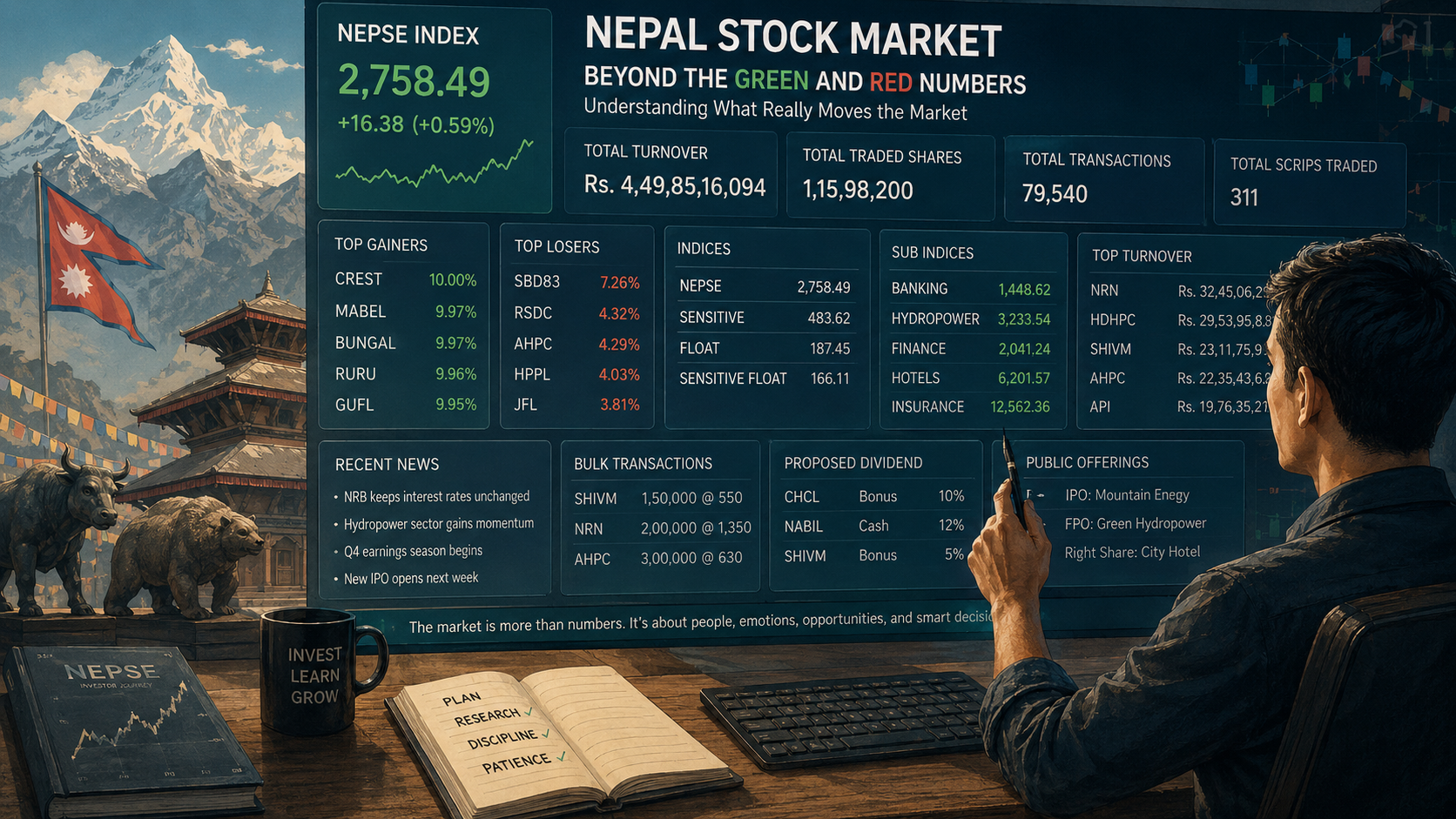
If you are new to Nepal’s Stock Market, opening a market dashboard like ShareHub Nepal, NEPSE, or any other market website can feel overwhelming. You are suddenly faced with flashing numbers, percentages, turnover figures, gainers, losers, indices, and dozens of technical terms. For many beginners, it looks complicated at first. But the truth is, every section on the market front page tells a simple story.
That front page is not just a collection of numbers. It is the daily language of the stock market. It shows where money is flowing, what investors are thinking, which sectors are becoming stronger, and where caution may be needed. Once you understand what each title means, the market becomes much easier to read.
Here is a simple human explanation of every major section you usually see on a Nepal stock market front page.
NEPSE Index – The Mood of the Entire Market : The NEPSE Index is often the first thing you notice. It is the overall measurement of how Nepal’s stock market is performing on that day. If the index is green and moving upward, it usually means the market is positive and buying activity is stronger. If it is red and falling, it shows selling pressure.
You can think of the NEPSE Index like a weather report for the stock market. A sunny day suggests optimism, while cloudy weather suggests caution. However, smart investors know that even when the overall market looks strong, not every stock performs equally. The index gives you the mood of the market, but not the full story.
Total Turnover – Where the Real Money is Moving : Turnover tells you how much money has been traded in the market during the day. This is one of the most important numbers for any investor.
A High Turnover means large amounts of money are actively flowing through the market. This usually signals strong participation and confidence. If the market is rising with strong turnover, it often means the movement has real strength behind it.
A Low Turnover, on the other hand, may indicate weak momentum. The market might appear active, but without enough money supporting the move, it could be temporary. Professional investors pay close attention to turnover because it often reveals the strength behind price movement.
Total Traded Shares – How Active the Market Really Is? : This section shows how many total shares were bought and sold during the day. When this number is high, it means market activity is strong. More shares changing hands often indicates healthy participation from investors.
Think of it as measuring how busy the market is. A quiet market usually signals uncertainty, while active trading often shows confidence and interest.
Total Transactions – The Number of Deals Happening : Total transactions show how many individual buying and selling deals took place. This helps investors understand how active traders are. A large number of transactions usually suggests strong retail participation, while fewer but larger deals can indicate institutional involvement.
This section helps experienced investors understand who may be driving the market.
Top Gainers – The Market’s Biggest Winners : Top gainers are the stocks that gained the most in price during the trading session. These stocks naturally attract attention because everyone wants to know why they are rising. Sometimes the reason is strong company performance, positive announcements, technical breakout patterns, or investor excitement.
However, smart investors do not blindly chase top gainers. They investigate the reason behind the rise before making decisions. A rising stock is not always a good investment.
Top Losers – Today’s Biggest Declines : Top losers are the stocks that dropped the most during the day. At first glance, these stocks may look risky. But experienced investors often look closely at this section because it can reveal hidden opportunities.
Sometimes a good company appears here simply because of temporary correction or short-term panic selling. These situations can create attractive buying opportunities for patient investors. Not every falling stock is bad, just as not every rising stock is good.
Market Indices – Understanding Different Market Segments : Apart from the main NEPSE Index, there are other indices that measure specific parts of the market. These help investors understand whether large companies, liquid stocks, or other market segments are leading the day’s movement.
It gives a deeper view of where strength or weakness is concentrated.
Sub-Indices – Watching Sector Rotation : Sub-indices divide the market into sectors like banking, hydropower, insurance, hotels, finance, and microfinance. This is where investors track sector rotation. Money does not stay in one sector forever. Sometimes investors move funds from banking into hydropower. Other times, insurance may become the center of attention.
Watching sub-indices helps investors identify which sectors are gaining momentum and where opportunities may be developing.
Top Turnover Stocks – Where Big Money is Focused : This section highlights stocks with the highest traded value. These stocks often attract serious attention from large investors and institutions.
When a stock repeatedly appears in this list, it usually means something important is happening around it. Professional traders often check this section first because it helps identify where major market interest exists.
Bulk Transactions – Following Smart Money : Bulk transactions show large block trades made by major investors or institutions. This section is especially useful for serious investors because it can reveal accumulation or distribution.
If strong companies are seeing repeated bulk buying, it may suggest confidence from institutional investors. Many professionals quietly monitor this section to detect early signs of strategic moves.
Proposed Dividends – Rewards for Shareholders : This section shows dividend announcements from companies. Dividends can come as cash payouts or bonus shares.
Investors who focus on long-term stability often pay close attention here because regular dividends usually indicate financially healthy companies. This section is especially useful for conservative investors seeking stable returns.
Public Offerings – New Opportunities Entering the Market : Public offerings include IPOs, rights shares, FPOs, debentures, and mutual fund launches. For many beginners, this is often the first entry point into investing. This section keeps investors informed about upcoming opportunities and deadlines.
Announcements – Official Market Information : Announcements include official company updates such as financial reports, annual meetings, dividend approvals, mergers, and regulatory disclosures. These announcements often have a direct impact on stock prices. Serious investors never ignore this section because official information often shapes future market movement.
Why Understanding the Front Page Matters? : Most beginners simply look for green numbers and assume the market is good, or see red numbers and panic. But experienced investors know that every title on the front page tells part of a bigger story. The front page reveals investor behavior, confidence levels, money flow, sector strength, and possible opportunities. Once you learn how to read it properly, you stop reacting emotionally and start making informed decisions.
The market front page is not just data on a screen. It is the daily conversation of Nepal’s stock market — and learning to understand it is one of the first steps toward becoming a smarter investor.