

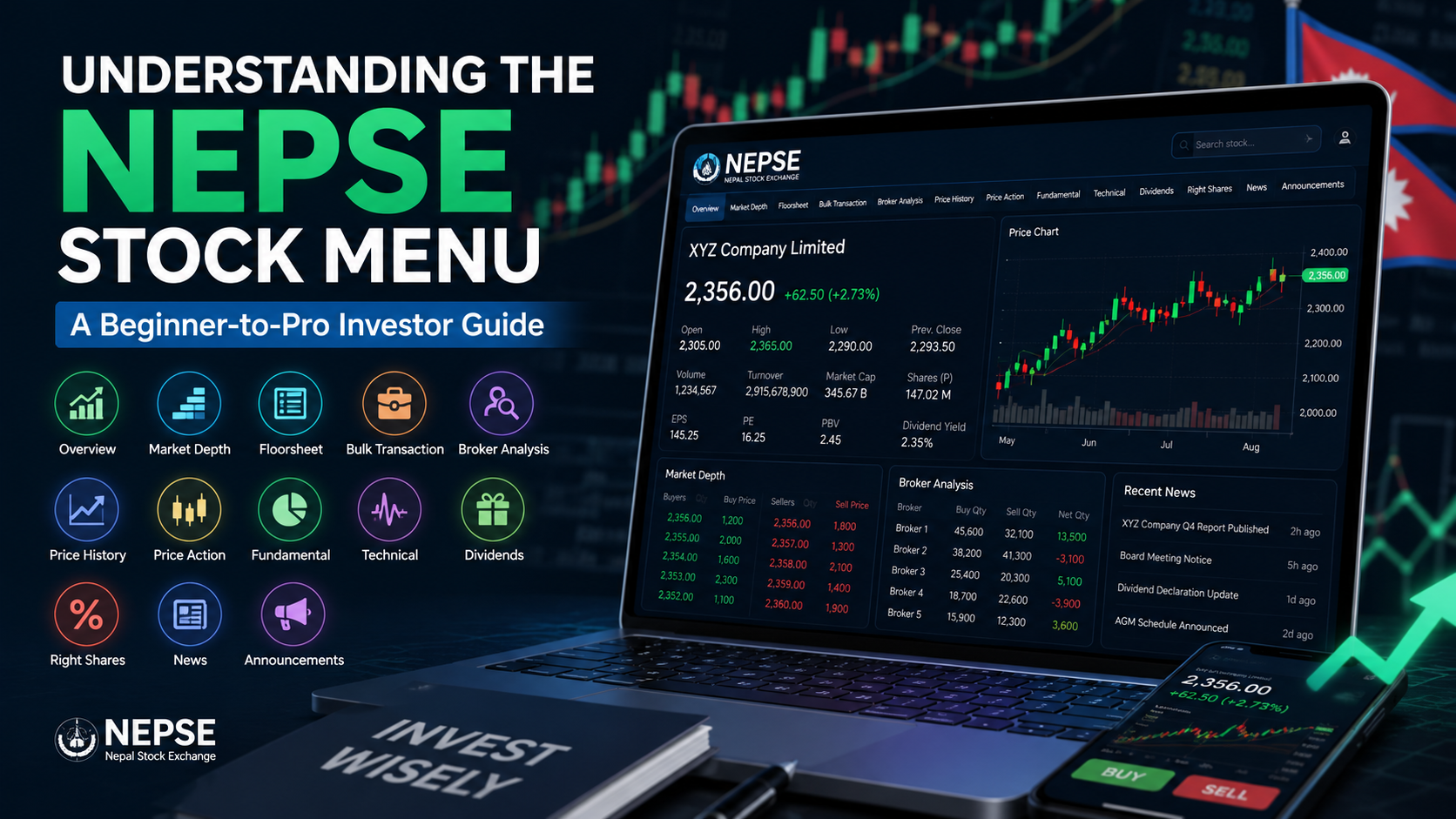
Want to become a smarter investor in the Nepal Stock Exchange (NEPSE)? This comprehensive guide explains every important stock analysis tool available on a NEPSE stock page, including Market Depth, Floorsheet, Broker Analysis, Price History, Fundamentals, Technical Indicators, Dividends, Rights Shares, News, and Announcements. Learn how professional investors evaluate stocks, identify opportunities, and make data-driven investment decisions. Whether you’re a beginner or an experienced trader, understanding these features can significantly improve your investment strategy and portfolio performance.
When you click on a stock in a NEPSE Trading Platform, you will see several tabs and tools designed to help investors analyse a company’s performance, market activity, and future potential. These features provide valuable insights before making any buy or sell decision. Understanding each section can help investors reduce risk and make more informed investment choices.
Overview: The Overview section provides a snapshot of the company’s key information, including current market price, daily price movement, market capitalisation, EPS, P/E ratio, book value, dividend history, and other important financial indicators. This is usually the first place investors visit to assess a stock quickly.
Market Depth: Market Depth shows real-time buy and sell orders in the market. It displays how many investors are willing to buy or sell shares at different price levels. Professional traders use this section to gauge market demand, supply, and short-term price direction.
Floorsheet: The Floorsheet records all completed transactions for that stock during the trading session. Investors can analyse trade volume, transaction sizes, and trading patterns to understand market sentiment.
Bulk Transaction: This section displays large share transactions conducted between investors. Bulk trades often indicate institutional activity, strategic investments, or significant ownership changes, making them important signals for serious investors.
Broker Analysis: Broker Analysis reveals which brokers are actively buying and selling the stock. Many experienced investors monitor broker activity to identify accumulation, distribution, or institutional interest.
Price History: The Price History tab provides historical share prices over different periods. Investors use this information to identify trends, support and resistance levels, and long-term performance patterns.
Price Action: Price Action focuses on stock movement behaviour using candlestick patterns and trading activity. Technical traders use this data to predict potential future price movements without relying heavily on financial statements.
Fundamental: The Fundamental section contains detailed financial information, including revenue, profit, EPS, net worth, book value, ROE, dividend history, and balance sheet data. Long-term investors consider this one of the most important sections for evaluating a company’s intrinsic value.
Technical: The Technical tab includes indicators such as RSI, MACD, Moving Averages, Bollinger Bands, and other charting tools. Technical analysts use these indicators to determine potential entry and exit points.
Dividends: The Dividends section shows the company’s bonus shares, cash dividends, and dividend history. Consistent dividend payments often indicate financial stability and shareholder-friendly management.
Right Shares: This tab displays information about rights offerings, where existing shareholders receive opportunities to purchase additional shares at discounted prices.
News: The News section contains market updates, company developments, regulatory changes, and events that may influence the stock price.
Announcements: Official company notices, AGM decisions, dividend declarations, mergers, acquisitions, and financial disclosures are published here. Investors should regularly monitor announcements before making investment decisions.




Really enjoyed reading this. the examples made the topic easier to understand. Have a great day and thanks for sharing.