

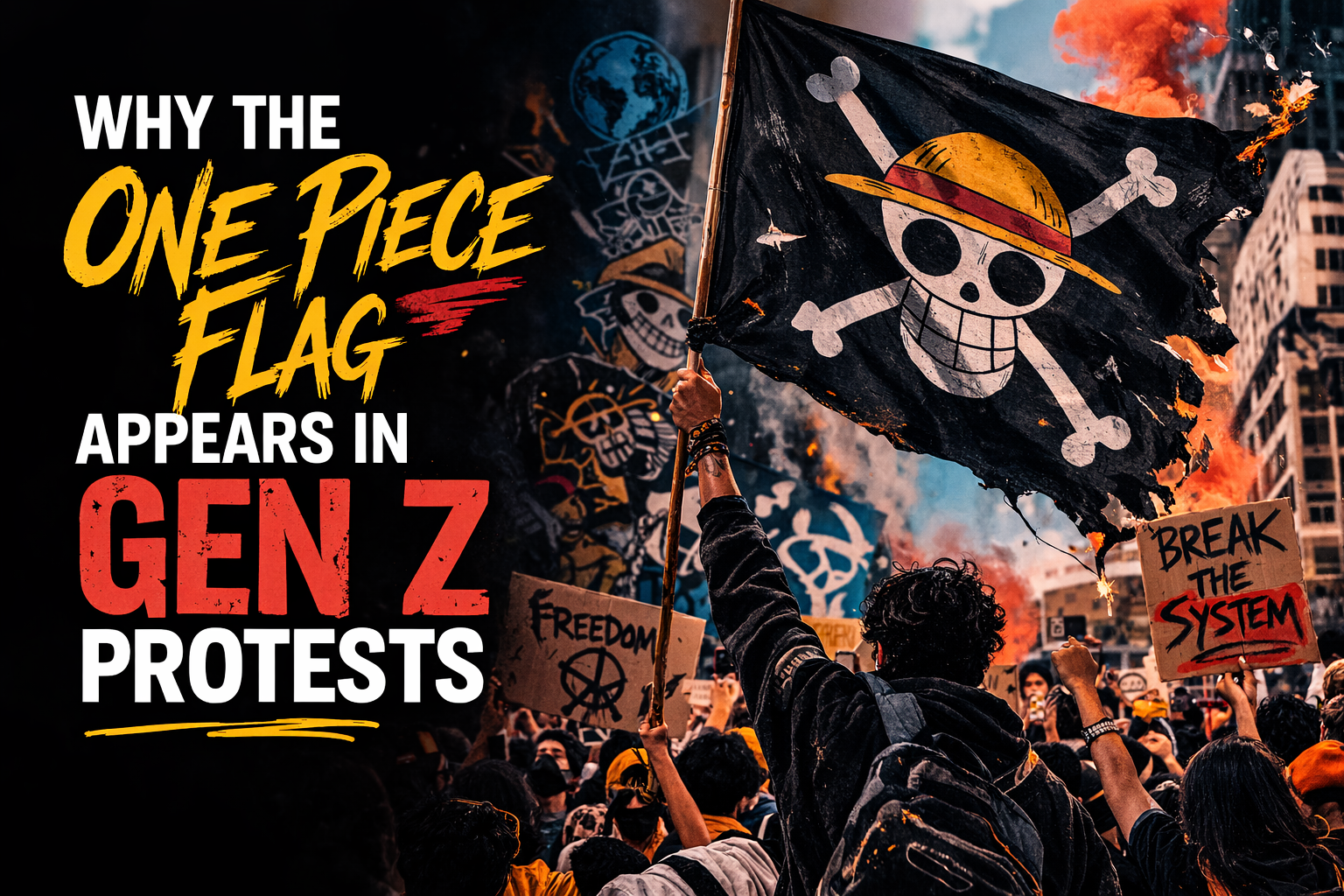
In recent years, a surprising symbol has begun appearing in protests led by young people around the world: the flag from One Piece. What began as a fictional pirate emblem in a popular manga has evolved into a powerful visual statement carried by demonstrators in various social movements. For many observers, this raises an intriguing question: why would an anime symbol become associated with real-world political and social protests?
To understand this phenomenon, it is important to explore two things: the rise of Generation Z as a politically active generation, and the cultural influence of One Piece, created by Eiichiro Oda. Together, these elements reveal why a pirate flag from a fictional story resonates so strongly with modern youth activism.
Who Are Generation Z? : Generation Z, commonly referred to as Gen Z, generally includes individuals born between 1997 and 2012. This generation grew up in a world shaped by the internet, smartphones, and social media platforms. Unlike previous generations, Gen Z has had immediate access to global information, online communities, and digital culture from a very young age.
Their formative years were influenced by major global events such as the 2008 financial crisis, increasing awareness of climate change, social justice movements, and political instability in various parts of the world. As a result, Gen Z is often described as digitally native, socially aware, and politically expressive.
Because of their online connectivity, ideas, symbols, and cultural references spread rapidly within this generation. A meme, character, or symbol from popular culture can quickly transform into a shared identity marker during protests or movements.
Cultural Influence of One Piece: The manga and anime series One Piece is one of the most successful stories in modern pop culture. First published in 1997, the story follows the adventures of the pirate captain Monkey D. Luffy and his crew as they search for the legendary treasure known as the “One Piece”.
However, beyond its adventurous storyline, One Piece explores deeper themes that strongly resonate with young audiences:
- Freedom and resistance against oppressive systems
- Standing up to corrupt governments
- Protecting friends and communities
- Challenging unjust authority
Within the story, the pirate flag—often called the Jolly Roger—represents rebellion, independence, and the refusal to submit to injustice. These themes naturally appeal to young protesters who feel they are challenging unfair political or social systems.
Why the One Piece Flag Appears in Protests? : Several factors explain why the One Piece flag has become a recurring symbol in Gen Z protests.
- A Symbol of Rebellion and Freedom: In the world of One Piece, pirates are not merely criminals; many represent individuals fighting against corrupt authority. For protesters, carrying the flag symbolises resistance against systems they believe are unjust.
- Global Cultural Recognition: Anime has become a global cultural phenomenon. Characters like Monkey D. Luffy are widely recognised among young people worldwide. Because of this shared familiarity, the symbol communicates a message instantly without the need for words.
- Internet and Meme Culture: Gen Z often communicates through memes and pop-culture references. When protest images circulate online, symbols from anime, games, or films can quickly become viral protest icons. The One Piece flag fits perfectly into this digital visual language.
- Anti-Authoritarian Themes: The narrative in One Piece frequently criticises authoritarian power structures, especially organisations like the fictional World Government. Protesters sometimes interpret these themes as parallels to real-world political struggles.
When Did This Trend Start? : The appearance of the One Piece flag in protests began to gain attention in the late 2010s and early 2020s, particularly as anime culture became mainstream globally. With Gen Z leading many youth movements, cultural symbols from entertainment media began blending with political expression.
Images of protesters holding anime flags have circulated widely on social media platforms such as TikTok, Twitter, and Reddit. Once a few viral images appeared, the symbol rapidly spread and was adopted by protesters in different countries.
Conclusion: The presence of the One Piece flag in Gen Z protests highlights an important shift in how younger generations express political identity. Rather than relying solely on traditional political symbols, Gen Z often draws from global pop culture to communicate ideas of freedom, resistance, and solidarity.
Through stories like One Piece and characters such as Monkey D. Luffy, themes of standing up against injustice have become deeply embedded in youth culture. When these ideas intersect with real-world frustrations and digital activism, fictional symbols can transform into powerful icons of protest.
In this sense, the One Piece flag is not merely an anime reference—it is a generational statement about freedom, unity, and the courage to challenge authority.