

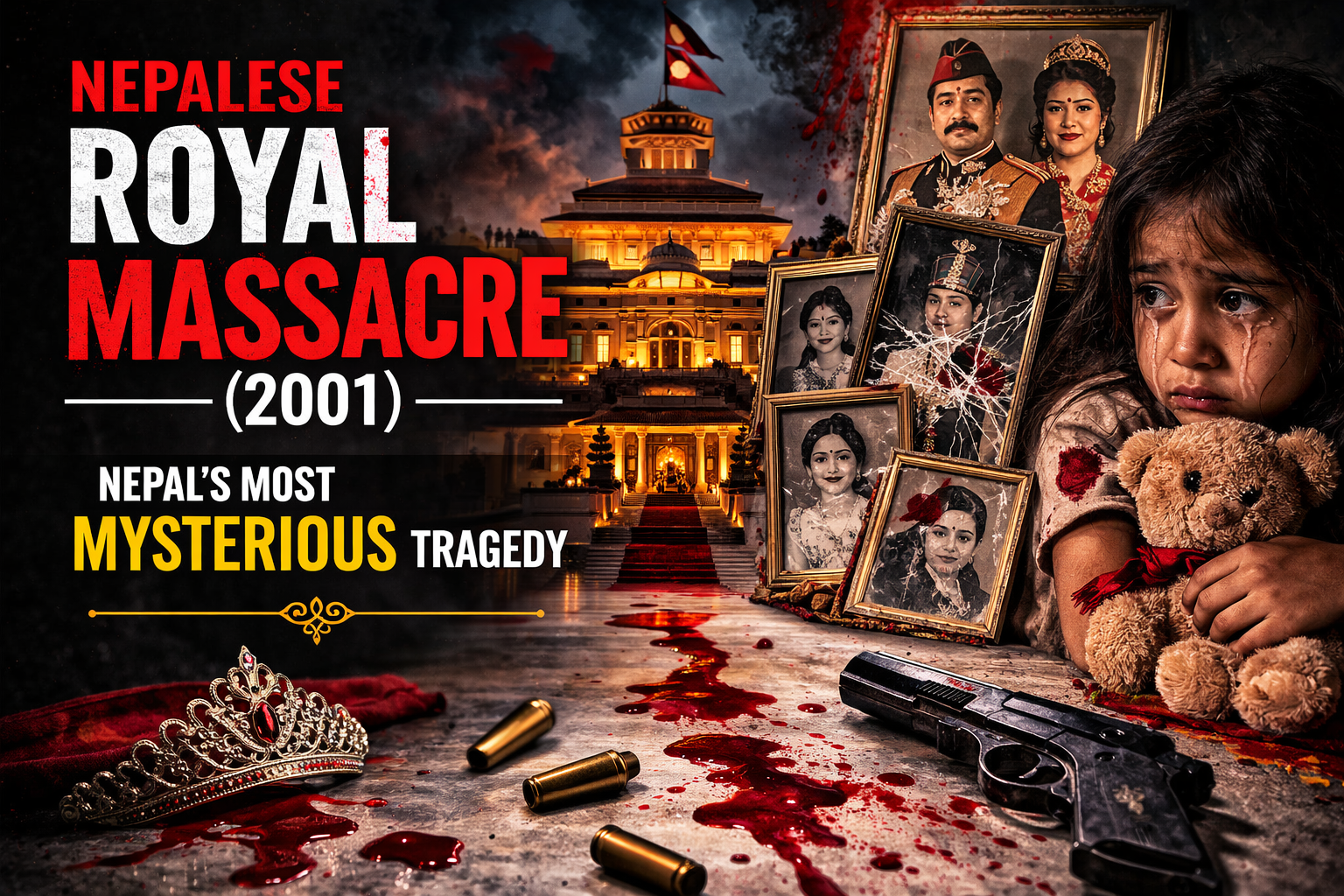
On 1 June 2001, one of the Most Shocking Massacre in modern Asian history happened at the Narayanhiti Palace in Kathmandu, Nepal. Ten members of Nepal’s royal family were killed during a private family gathering. Even today, many people believe the truth is still unresolved.
What Happened That Night: During a royal family dinner, gunshots suddenly erupted inside the palace. The official investigation said that Dipendra Bir Bikram Shah Dev, the Crown Prince of Nepal, opened fire on the family with automatic weapons.
Among those killed were:
- King Birendra
- Queen Aishwarya
- Prince Nirajan
- Princess Shruti
- Several other Royal Relatives.
After the shooting, Crown Prince Dipendra allegedly shot himself and fell into a coma.
The Strange Twist: Even though he was in a coma, Crown Prince Dipendra Bir Bikram Shah Dev was declared King of Nepal for three days. After he died on 4 June 2001, the throne passed to his uncle: ➡ Ex. King Gyanendra Shah
Official Explanation: The government investigation concluded:
- Crown Prince Dipendra was drunk and possibly under drugs.
- He was angry because his parents opposed his marriage.
- In a rage, he shot the Royal Family.
Why Many People Think It’s Unsolved: A huge number of Nepalis still doubt the official story. Some reasons include:
- Very Short Investigation: The investigation lasted only one week, which many felt was too fast for such a major tragedy.
- No Full Public Evidence: Important details like:
- Forensic Reports,
- Witness Testimonies,
- Full Ballistic Analysis were never fully released.
- Suspicion Around King Gyanendra: Since Gyanendra Shah became king after the massacre, some people suspected possible political motives — although no evidence has ever proven this.
- Survivors’ Statements Were Limited: Several surviving witnesses gave unclear or contradictory accounts.
Major Theories: People often discuss several theories:
- Official Story – Crown Prince Dipendra acted alone.
- Palace Conspiracy – Internal Power Struggle.
- Foreign Intelligence Theory – Involvement of Foreign Powers.
- Accidental Shooting Gone Wrong – A fight that escalated.
None of these theories have been conclusively proven.
Impact on Nepal: The massacre had massive consequences:
- The popularity of the Monarchy collapsed.
- Political instability increased.
- It contributed to the end of the monarchy during the Nepalese Civil War era.
In 2008, Nepal officially abolished the Monarchy and became a Republic.