

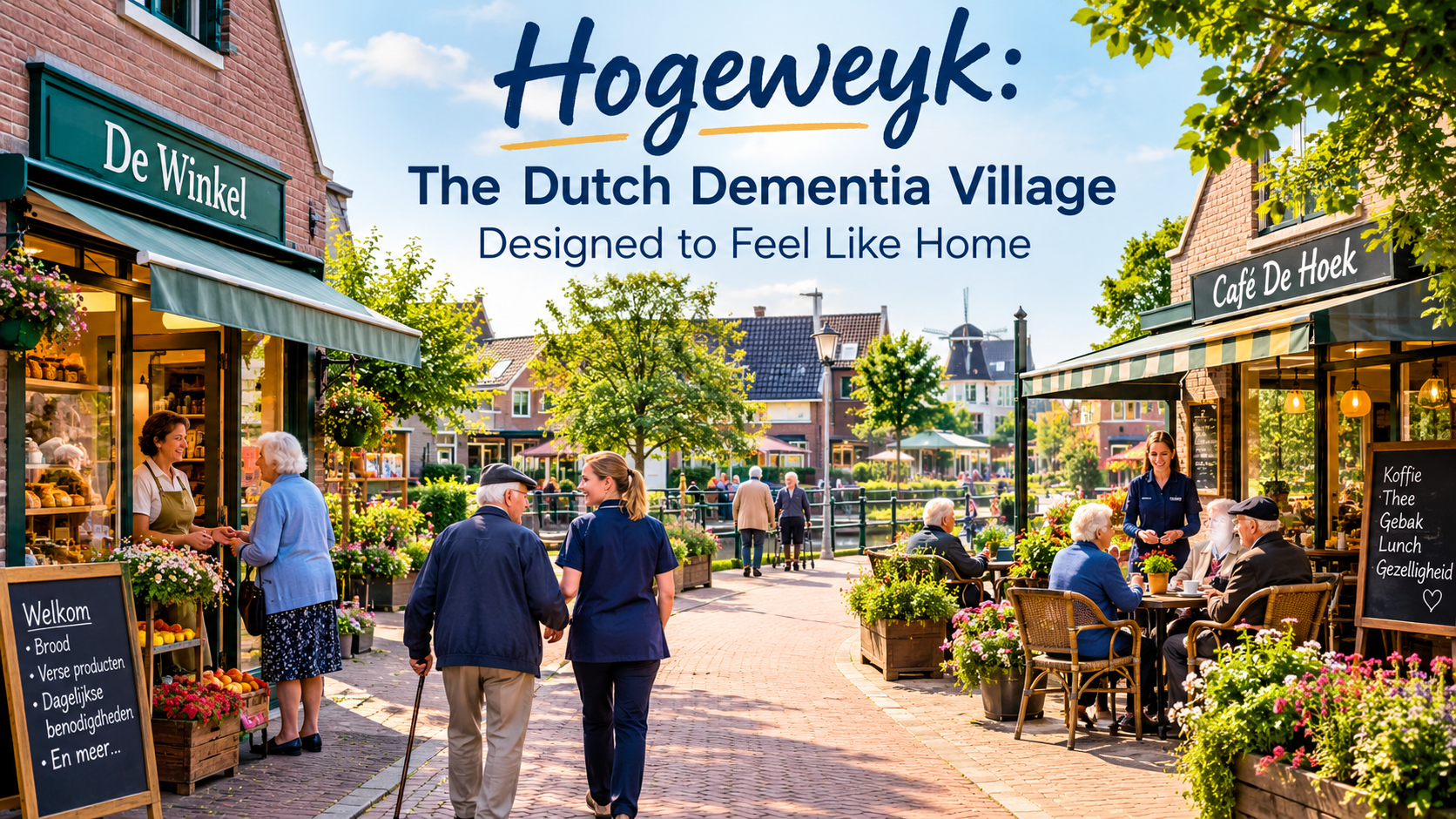
Imagine a small Dutch neighbourhood where residents can walk along streets, visit a café, browse a shop or spend time in a garden — all while receiving specialist dementia care. It sounds like an ordinary village, but there is an important difference: almost everyone living there has dementia.
This innovative concept is known as Hogeweyk, located in Weesp in the Netherlands. Rather than making residents feel as though they are patients in a traditional hospital or care home, the environment is designed around familiar routines, social interaction and everyday life.
A Dementia Care Home without the Hospital Feeling: Traditional care facilities can sometimes feel clinical, with corridors, nurses’ stations and routines that remind residents they are receiving medical care.
Hogeweyk takes a different approach. The setting resembles a compact residential community, complete with streets, gardens, communal spaces and facilities that encourage residents to move around naturally. Care is still present, but it is deliberately woven into everyday activities rather than dominating the surroundings.
The idea is simple: people with dementia are still people with preferences, habits and personalities — not simply patients with a diagnosis.
Caregivers Become Part of Everyday Life: One of the most distinctive elements of the model is the way staff interact with residents.
Instead of always appearing as traditional hospital-style carers, trained staff can take on familiar community roles. Depending on the setting, residents may encounter people acting as shopkeepers, café staff, neighbours or other members of their social environment.
This helps create a world that feels more recognisable. A resident might go to a communal shop, sit down for a coffee or walk through a familiar-looking outdoor space while staff discreetly provide the support they need. Behind this apparently ordinary lifestyle is a carefully managed care environment.
Why Familiarity Matters in Dementia Care: Dementia can affect memory, orientation and the ability to navigate unfamiliar situations. A highly clinical environment may therefore feel confusing or intimidating for some people.
A familiar-looking neighbourhood can provide visual and social cues that make daily life easier to understand. Rather than constantly asking, “Why am I here?”, the surroundings can encourage a more natural question: “Where shall I go today?” That distinction is central to the philosophy behind the dementia-village concept.
Residents Can Still Make Choices: Another important principle is personal autonomy. Daily life is structured around giving residents opportunities to make choices. They can participate in activities, spend time outdoors, meet other residents and follow routines that reflect their interests and abilities.
This does not mean residents are completely independent. Specialist support remains available. Instead, the environment is designed to allow people to experience as much ordinary life as possible while remaining within a secure care setting.
More Than Just a Village: It would be easy to describe Hogeweyk simply as a clever architectural project, but its significance goes further.
The concept raises a broader question about dementia care:
- Should care environments be designed primarily around the needs of institutions, or around the everyday lives of the people who live there?
- The Dutch approach attempts to put ordinary human experiences — friendship, freedom, routine, choice and community — closer to the centre of dementia care.
Could This Model Influence Future Care Homes?: As populations age, dementia care is becoming an increasingly important issue around the world. Families, healthcare professionals and policymakers are looking for approaches that can provide safety without unnecessarily restricting people’s quality of life.
The dementia-village model offers one possible direction. It does not remove the need for professional healthcare, medication management or safety measures. Instead, it attempts to combine specialist dementia support with an environment that feels less institutional.
That balance may become increasingly relevant as countries rethink what a modern care home should look like.
The Bigger Lesson from the Netherlands: The most fascinating part of Hogeweyk is not simply that there is a café, shop or village street inside a dementia-care setting.
It is the philosophy behind those features. Instead of asking how to make a care facility look like a hospital, the concept asks how a care environment can feel more like home. For people living with dementia, that change in perspective can influence how they experience their surroundings, their daily routines and their relationships with other people.
The Dutch dementia-village experiment therefore represents more than an unusual care facility. It is part of a wider conversation about dignity, independence, person-centred care and what it really means to create a home for someone living with dementia.