
What happens when a river that normally supports communities, farmland and aquatic life begins to disappear?
In Indonesia’s Central Java, the answer has been grim. A prolonged dry spell has dramatically reduced water levels in the Silugonggo River, leaving huge numbers of fish dead across exposed sections of the riverbed. The event has become a striking warning of how quickly drought can turn a water crisis into an ecological disaster.
A River Running Out of Water: The Silugonggo River, also known as the Juwana River, passes through Pati Regency in Central Java. It is important not only for wildlife but also for people who depend on its water for agriculture and everyday needs.
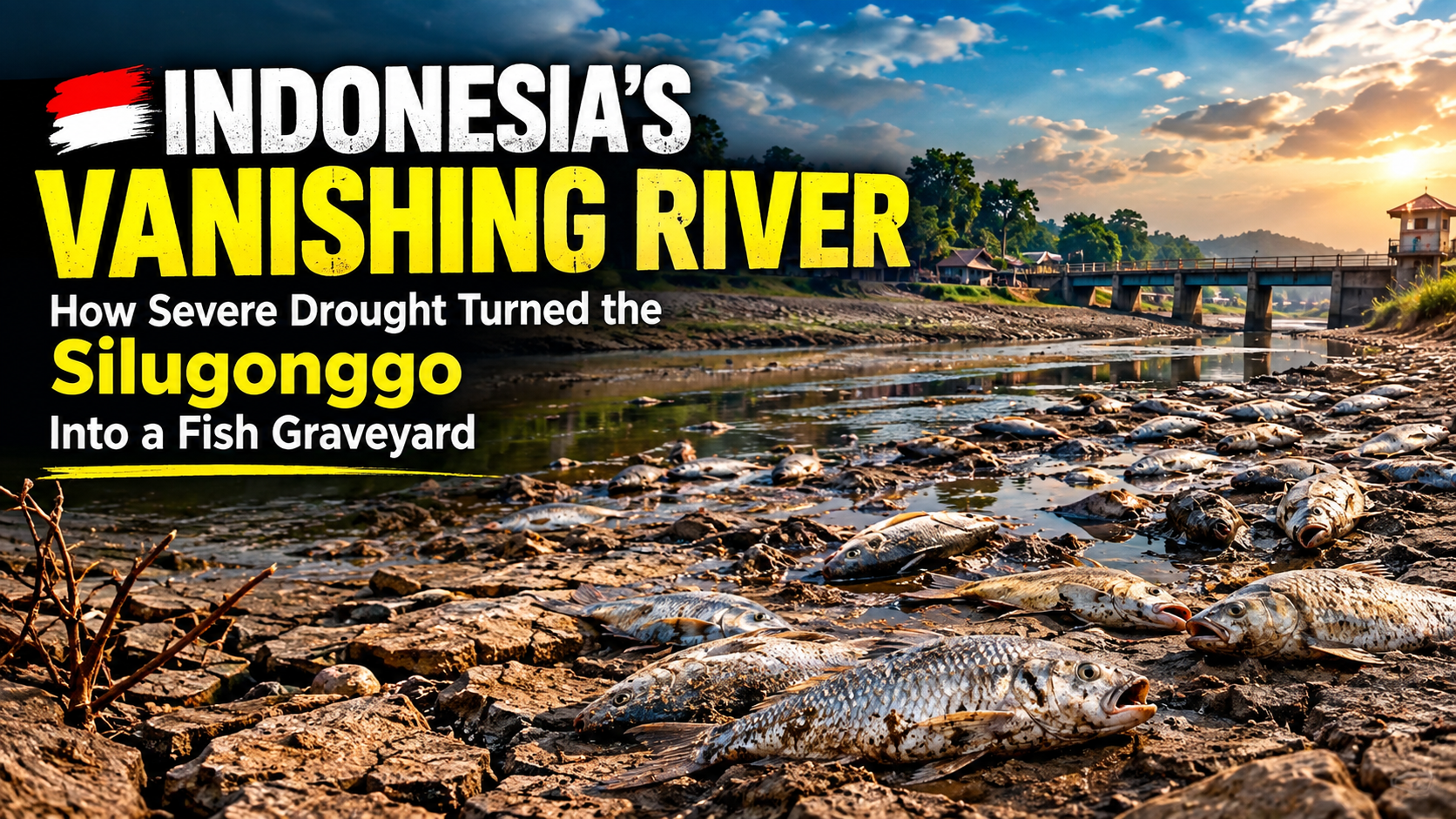
Recent footage shows parts of the river reduced to shallow pools and exposed mud. Around the Rubber Dam in Bungasrejo Village, large numbers of dead fish have been reported, with millions believed to have died as the water level fell.
This is not simply a case of fish being caught in a smaller river. The shrinking waterway creates a chain reaction that can rapidly become fatal for aquatic life.
Why Are So Many Fish Dying?: When a river loses a substantial amount of water, several environmental problems can occur at the same time. Less water means less dissolved oxygen. Fish need oxygen dissolved in the water to survive. As shallow pools become warmer and more stagnant, oxygen levels can fall dramatically.
At the same time, fish become concentrated into increasingly smaller areas. This places greater pressure on the remaining oxygen and available habitat.
As the water disappears, temperatures can rise and pollutants or organic material can become more concentrated. Eventually, the remaining pools may no longer provide suitable conditions for large numbers of fish. That appears to be what has happened along affected sections of the Silugonggo.
The Fish Kill Is Also a Human Problem: The tragedy is not limited to wildlife. Communities around Pati depend on reliable water supplies, while agriculture across the region requires water for crops. Reports say that at least 20 villages across nine districts have been affected by drought, with residents requiring deliveries of clean water.
Farmers face an especially difficult situation. Less river water means greater pressure on irrigation supplies, while continuing dry weather can damage crops and reduce agricultural productivity. For families who rely on fishing, the loss of aquatic life creates another economic blow.
An Unusually Severe Dry Season: Local residents have described the conditions as unusually severe. Indonesia’s Meteorology, Climatology and Geophysics Agency, BMKG, placed Pati and more than 20 other Central Java regencies under its highest meteorological drought warning for the first part of September.
The local government has also maintained a drought disaster alert, with the status scheduled to remain in place until the end of October. That makes the dead fish more than a shocking photograph. They are a visible sign of a much wider water shortage.
Could the River Recover?: Yes — but recovery depends heavily on rainfall and how long the drought continues.
If substantial rainfall returns, river levels can gradually rise and aquatic habitats may begin to recover. However, a severe fish die-off can leave wider ecological consequences. Decomposing fish consume oxygen and can further affect water quality, while the loss of large numbers of animals can disturb the river’s food web. Recovery may therefore take longer than simply waiting for the water to return.
What Indonesia’s Drying River Teaches Us: The Silugonggo crisis illustrates an important point about drought: the damage does not begin when a river completely disappears. Long before a waterway becomes dry, falling water levels can alter temperature, oxygen availability, water quality and habitat conditions. Those changes can gradually push an ecosystem towards collapse.
For communities, the consequences can spread from fisheries to farming, drinking-water supplies and household incomes and that is why images of a riverbed covered with dead fish are so powerful. They show the environmental consequences of water scarcity in a form that is impossible to ignore.
Final Thoughts: Indonesia’s Silugonggo River is facing a stark drought-driven crisis. Millions of fish have reportedly died as water levels plunge, while surrounding communities and farmland face increasing pressure from the prolonged dry conditions.
The story is ultimately about more than dead fish. It is about what happens when a freshwater ecosystem loses the water it needs to function. As climate patterns become increasingly unpredictable, events like this highlight the growing importance of protecting rivers, managing water resources responsibly, and preparing communities for prolonged periods of drought.
The river may eventually flow again — but the ecological and human cost of letting it disappear can last far longer than the drought itself.