
The 2025 Gen-Z protests in Nepal became one of the most dramatic and destructive political uprisings in the country’s recent history. What began as youth-led demonstrations against corruption, unemployment, and a controversial social-media ban quickly escalated into widespread unrest across Kathmandu and several other cities. Large crowds of mostly young protesters gathered in the streets demanding political reform and accountability from the government. While the early rallies were peaceful and even included music, speeches, and social-media activism, tensions with security forces soon intensified. Clashes between protesters and police triggered riots, vandalism, and large-scale arson that spread rapidly through the capital.
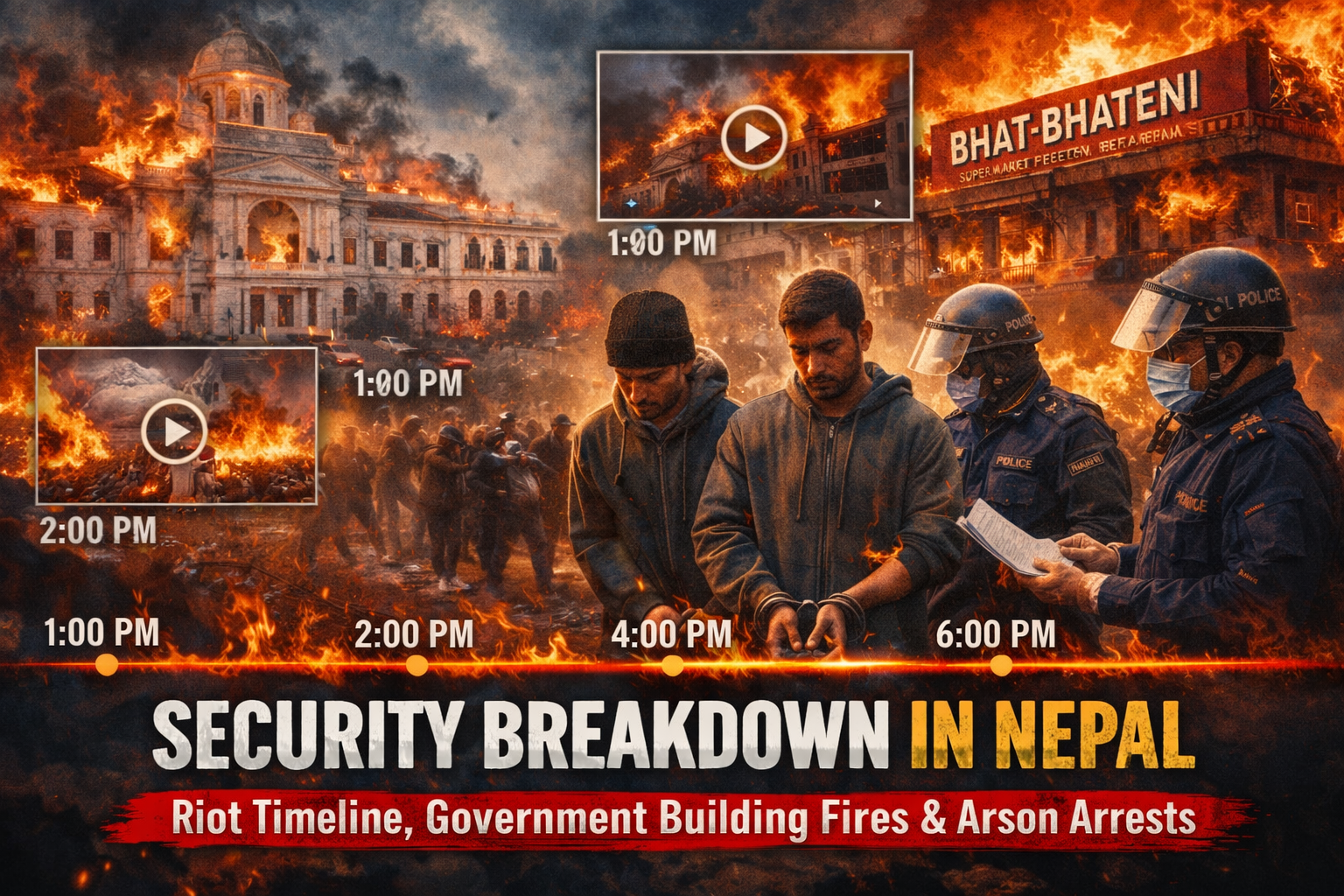
During the height of the unrest, several major government institutions were attacked or burned. Protesters stormed parts of Singha Durbar, the administrative headquarters of Nepal’s government, and fires damaged sections of the historic complex. Buildings connected to the Supreme Court of Nepal and the Federal Parliament of Nepal were also targeted during the riots. Demonstrators reached the area around Rashtrapati Bhavan (Sital Niwas), the official residence of the president, and the compound of the Prime Minister’s Residence, Baluwatar, where property damage and fires were reported. Political party offices belonging to major parties were vandalized, reflecting widespread public anger at the political establishment.
Private businesses and media organizations were also heavily affected. Protesters attacked the headquarters of Kantipur Media Group and damaged other media offices. One of the most visible targets was the retail chain Bhat‑Bhateni Supermarket, where multiple stores across the country were looted, vandalized, or burned. Branches in areas such as Naxal, Koteshwor, Maharajgunj, and Boudha suffered severe damage, and several were completely destroyed by fire. Corporate towers, cable-car stations, and business complexes in Kathmandu and other cities were also burned or looted as the violence spread.
The protests were largely decentralized and did not have a single leader, although some activists and youth figures became widely associated with the movement. Prominent voices included Sudan Gurung and Miraj Dhungana, who represented the frustrations of younger generations demanding political change. Some public personalities and entertainers expressed support for the protesters’ demands, including well-known comedians Madan Krishna Shrestha and Hari Bansha Acharya. Other actors, influencers, and musicians attended rallies or posted supportive messages online, though none were officially accused of participating in violent acts.
Security forces responded with curfews, mass arrests, and emergency measures to regain control of the capital. Hundreds of people were detained on charges of vandalism, looting, and arson, though most were ordinary individuals rather than well-known public figures. The unrest resulted in dozens of deaths, thousands of injuries, and billions of rupees in property damage across the country. Investigations were launched to determine responsibility for the destruction, but many incidents were attributed to chaotic crowd actions rather than organized groups.
Despite the destruction, the Gen-Z protests had a lasting political impact. The uprising exposed deep dissatisfaction among Nepal’s younger population and forced national debate on corruption, governance, and economic opportunities. It also accelerated the rise of youth-driven political voices and reform movements that sought to reshape the country’s political landscape. The events of 2025 remain a powerful reminder of how quickly social frustration can transform peaceful demonstrations into a nationwide crisis when trust in institutions collapses.