

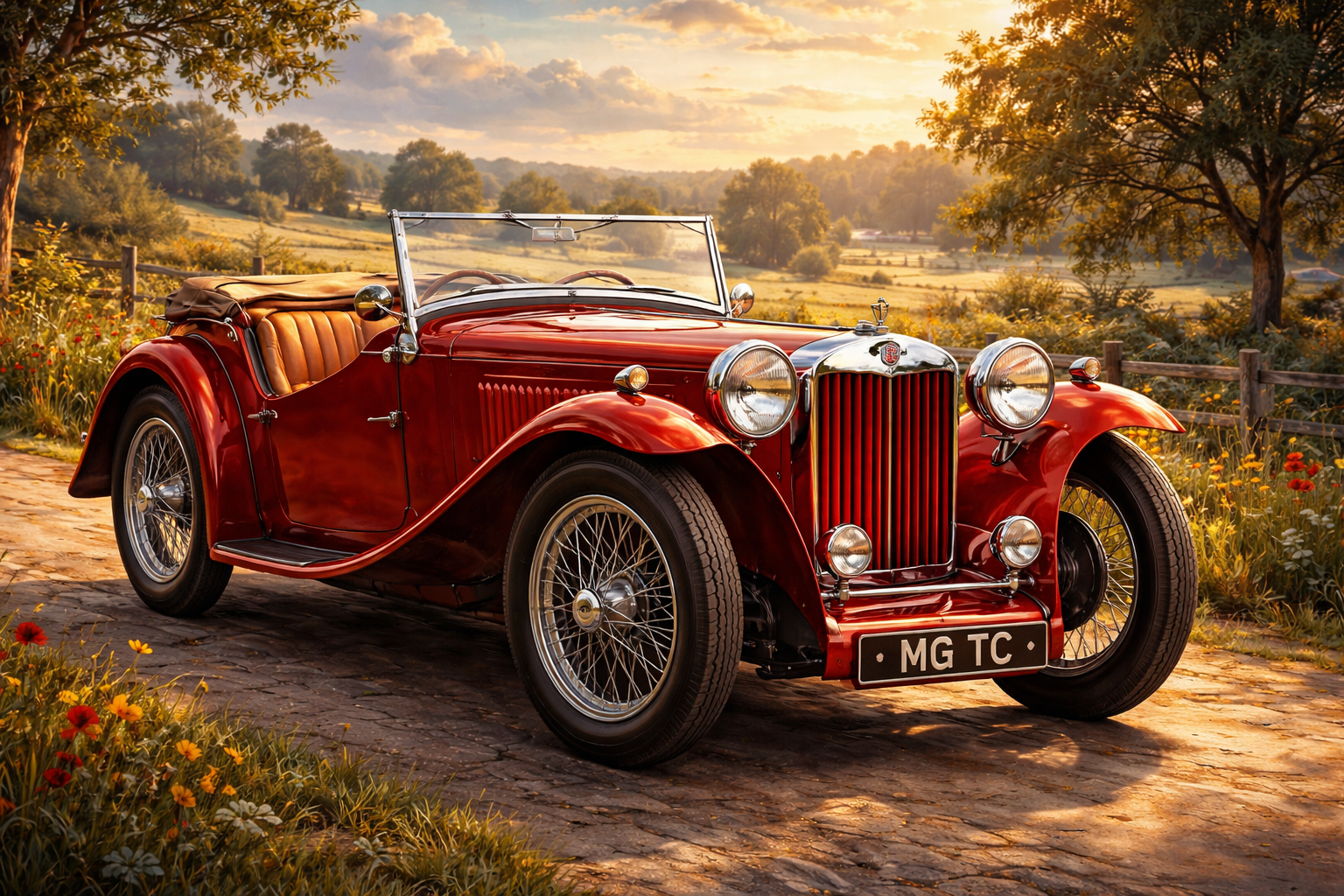
When discussing the golden age of British sports cars, few models hold the same historic charm as the MG TC. Produced in the immediate aftermath of the Second World War, the TC symbolised optimism, craftsmanship, and the rebirth of Britain’s motor industry. With its classic open-top design, wire wheels, and spirited performance, the MG TC quickly became more than just a car—it became a cultural icon.
For collectors and enthusiasts today, the MG TC represents one of the most influential roadsters ever built, laying the groundwork for the global popularity of British sports cars.
History : The MG resumed production shortly after the war, introducing the TC in 1945 as the successor to the pre-war MG TB. Mechanically similar to its predecessor, the TC retained MG’s traditional design philosophy: lightweight construction, nimble handling, and a focus on driving pleasure.
What made the TC truly remarkable, however, was its timing. Thousands of American servicemen stationed in Britain during the war discovered MG sports cars and developed a taste for their lively performance and charming design. When they returned home, many sought to import these little British machines.
As a result, the MG TC became one of the first British sports cars widely exported to the United States. Its popularity overseas helped spark America’s fascination with small, agile European roadsters.
Under the bonnet, the TC featured a 1,250 cc inline-four engine derived from the pre-war MG TA series. Producing around 54 horsepower, the engine might sound modest by modern standards, yet its lightweight body ensured lively acceleration and engaging driving dynamics.
Between 1945 and 1950, MG produced roughly 10,000 examples of the TC, many of which were exported abroad—an unusual strategy at a time when most British manufacturers prioritised domestic markets.
A Brief Look at the MG TC’s Key Characteristics
Classic Pre-War Styling : Despite being a post-war vehicle, the TC retained the elegant design language of 1930s British roadsters, including sweeping wings, a narrow body, and the distinctive MG grille.
Engaging Driving Experience : The TC was never designed for outright speed. Instead, it offered responsive steering, lightweight agility, and a raw connection between driver and road—qualities cherished by enthusiasts.
The Start of the American Sports Car Craze : By introducing many Americans to the joys of sports car motoring, the MG TC indirectly inspired the development of domestic rivals such as the Chevrolet Corvette years later.
Collector Appeal : Today, well-preserved TC models are highly sought after among classic car collectors, not only for their rarity but also for their pivotal role in automotive history.
Conclusion : The MG TC may appear modest by contemporary standards, yet its historical significance is immense. It bridged the gap between pre-war craftsmanship and the modern sports car movement, while also introducing countless drivers—particularly in the United States—to the thrill of lightweight British motoring.
More than seventy years later, the MG TC remains a symbol of elegance, nostalgia, and pure driving pleasure. For enthusiasts and collectors alike, it stands as one of the most important roadsters ever produced by MG—a small car with a remarkably large legacy.