
The Bagmati River is more than just a river flowing through Kathmandu. It is a symbol of Nepal’s spiritual heritage, cultural identity and centuries-old civilisation. For generations, people have worshipped its waters, performed religious ceremonies along its banks and regarded it as one of the country’s most sacred rivers.
Yet today, the Bagmati tells a very different story.
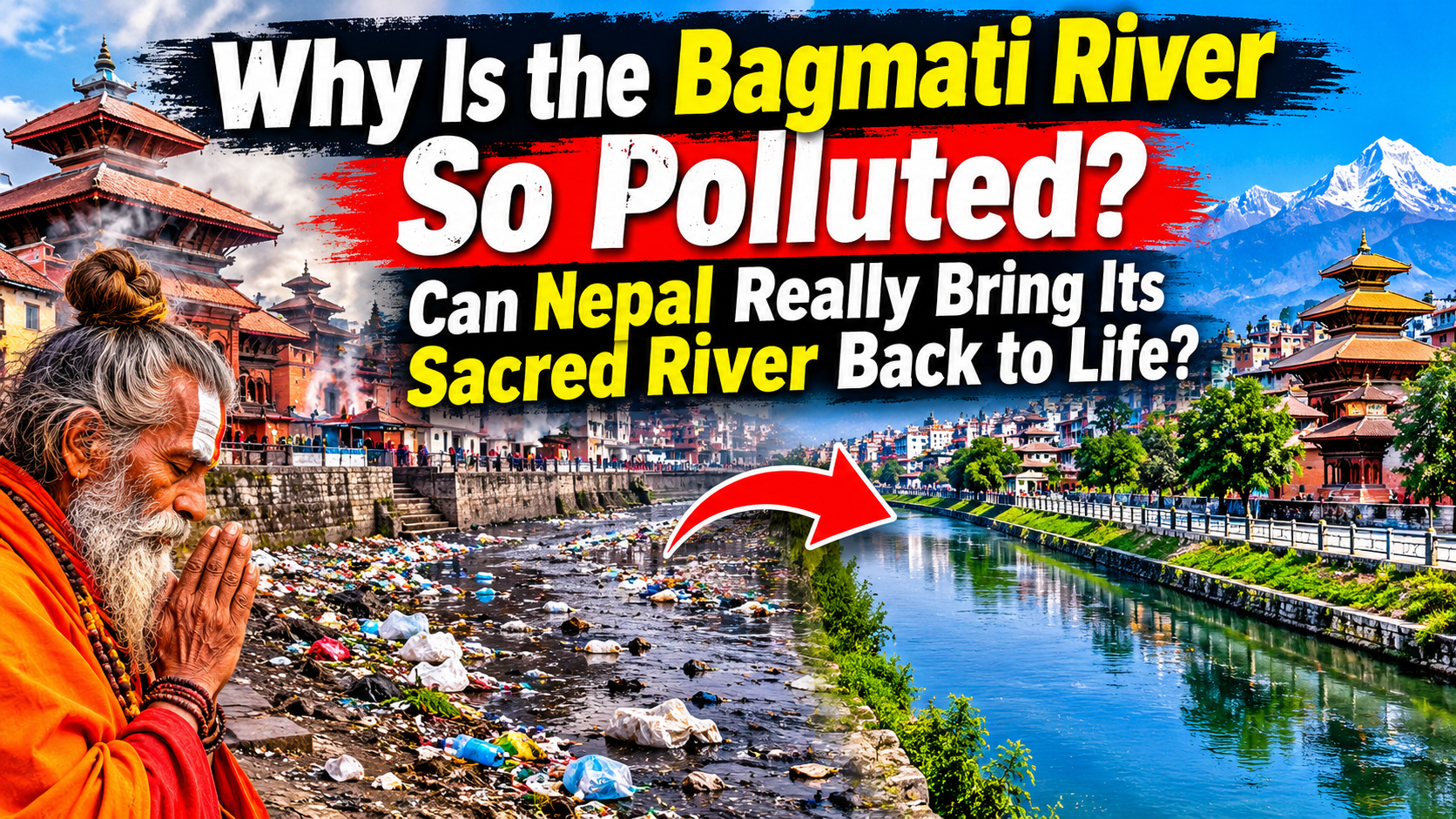
In several stretches, what should be a beautiful, life-giving river has become a channel carrying sewage, plastic waste, industrial pollution and the consequences of uncontrolled urban development. Its unpleasant smell, dark water and piles of rubbish have become a painful reminder of how easily a nation’s natural treasures can be neglected.
But here is the question that deserves our attention: Is the Bagmati River beyond saving, or could Kathmandu witness one of the greatest environmental transformations in Nepal’s history?
The answer is encouraging: cleaning the Bagmati is possible. However, it requires much more than occasional clean-up campaigns. It demands proper sewage treatment, responsible urban planning, strong environmental laws and a long-term commitment from everyone.
Why Has the Bagmati River Become So Dirty?
The pollution of the Bagmati River did not happen overnight. It is the result of decades of population growth, poor waste management, inadequate infrastructure and a lack of effective environmental protection.
Here are the major reasons behind its deteriorating condition:
1. Untreated sewage flowing directly into the river: One of the biggest reasons is the direct discharge of untreated household sewage. Thousands of households, businesses and other establishments produce wastewater every day. Where sewerage systems and treatment facilities are inadequate, this waste eventually finds its way into the river.
Human waste, detergents, organic matter and harmful bacteria contaminate the water, creating serious environmental and public health risks.
A water-quality report published in October 2026 found that the Bagmati becomes increasingly polluted as it passes through densely populated parts of Kathmandu Valley. Its condition is relatively better near Sundarijal but deteriorates significantly downstream.
2. Rapid urbanization and population growth: Kathmandu has expanded rapidly over the years. More people mean more houses, roads, businesses, construction sites and wastewater.
Unfortunately, urban infrastructure has struggled to keep pace with this expansion. In many places, the river has effectively become an alternative drainage system. Instead of being protected as a natural waterway, it receives the waste generated by the surrounding city.
The result is an environmental problem that becomes harder and more expensive to reverse with every passing year.
3. Plastic bags and household rubbish: Plastic bottles, food packaging, shopping bags and other household rubbish frequently find their way into the river. Some people treat riverbanks as convenient dumping grounds, while rubbish carried by drains and rainfall eventually enters the water.
Plastic does not simply disappear. It breaks into smaller pieces, damages aquatic habitats and can remain in the environment for decades.
4. Industrial and commercial pollution: Factories, workshops, vehicle-related businesses and other commercial establishments can contribute chemical pollutants and contaminated wastewater.
If industrial wastewater is discharged without proper treatment, it can introduce substances that are harmful to fish, aquatic organisms and people living near the river. Research on the Bagmati identifies uncontrolled domestic and industrial wastewater discharge, alongside unmanaged urbanisation and rubbish disposal, as major pollution sources.
5. Encroachment and destruction of riverbanks: A healthy river needs room to flow naturally. However, construction, encroachment, sand extraction and the loss of natural riverbank vegetation have damaged parts of the Bagmati’s ecosystem.
When natural riverbanks disappear, the river loses important areas that help support wildlife, filter pollutants and protect against erosion.
6. Weak enforcement and a lack of public responsibility: Cleaning a river cannot be achieved through government announcements alone. Environmental laws must be enforced, illegal dumping must be controlled, and polluters must be held accountable.
Unfortunately, when people continue throwing rubbish into waterways and wastewater treatment systems fail to operate effectively, even well-intentioned restoration campaigns struggle to deliver lasting results.
Can the Bagmati River Actually Be Cleaned? : Absolutely. The Bagmati is not necessarily a lost cause. One important reason for hope is that the river is not equally polluted everywhere. Its upper reaches around Sundarijal retain considerably better water quality than many stretches passing through central Kathmandu.
This means that the river’s natural condition can be protected and its damaged sections gradually restored. However, removing visible rubbish is only the beginning. The real challenge is stopping pollution before it enters the water.
Seven Practical Ways to Bring the Bagmati River Back to Life
1. Build and properly operate modern sewage treatment plants: This must be the first priority. Wastewater from homes, hotels, restaurants and businesses should be collected and treated before being released into the river. Treatment plants must have sufficient capacity, reliable electricity, proper maintenance and regular water-quality monitoring. Building treatment facilities is not enough. They must actually work.
2. Stop dumping plastic and household waste: Every household has a responsibility. Local authorities should provide reliable rubbish collection, introduce better waste segregation and impose meaningful penalties for illegal dumping. Public awareness campaigns should encourage residents to treat the Bagmati as a shared natural asset rather than a rubbish disposal site.
3. Introduce strict industrial wastewater regulations: Factories and commercial establishments must treat their wastewater according to environmental standards. Regular inspections, transparent pollution testing and penalties for violations would help prevent harmful chemicals from entering the river.
4. Restore natural riverbanks: Planting native trees, restoring riverbank vegetation and protecting natural habitats could improve the surrounding environment. Green river corridors would also make the city more attractive, provide recreational spaces and help protect the river ecosystem.
5. Improve water flow and protect the river’s natural sources: A river needs sufficient clean water to maintain its ecological health. Protecting upstream catchments, managing water extraction and supporting natural water recharge can help maintain healthier river flows. However, adding clean water alone cannot solve the problem if untreated sewage continues entering the river.
6. Use modern environmental technology: Scientific research has explored several approaches to improving Bagmati water quality, including:
- Artificial aeration to increase dissolved oxygen.
- Floating treatment wetlands to absorb certain nutrients.
- Drainage nets to capture floating rubbish.
- Advanced wastewater treatment technologies.
- Continuous water-quality monitoring.
These methods can support restoration, but they cannot replace proper sewage management and pollution prevention.
7. Make river conservation a national mission: The Bagmati should not be the responsibility of one municipality or government department alone. Federal, provincial and local authorities, environmental organisations, businesses, religious institutions and ordinary residents need to work together. A transparent public restoration programme should publish regular information about water quality, sewage treatment performance, waste collection and progress at different river locations.
Has Nepal Already Tried to Clean the Bagmati? : Yes. Nepal has made several attempts to restore the river. One of the most recognisable initiatives is the Bagmati River Clean-up Campaign, which began in May 2013. Volunteers, government representatives, community groups and environmental activists have participated in cleaning activities along the river.
These campaigns have helped remove accumulated rubbish and raise public awareness. Research has also recorded some improvement in pollution indicators during the early years of the campaign. However, there is an important lesson here: collecting rubbish every Saturday cannot permanently clean a river if sewage continues flowing into it throughout the week. Nepal needs a permanent pollution-control system rather than relying mainly on occasional cleaning events.
What Would Kathmandu Look Like If the Bagmati Became Clean Again? : Imagine walking beside the Bagmati on a beautiful morning. Instead of unpleasant smells, dark water and piles of rubbish, you see flowing water, green riverbanks and birds returning to their natural habitat.
Imagine families enjoying riverside parks, tourists discovering the cultural beauty of Pashupatinath and local communities benefiting from a healthier urban environment. The benefits would extend far beyond appearance.
A restored Bagmati could mean:
- Better protection of public health.
- Healthier aquatic ecosystems and biodiversity.
- Improved environmental conditions around Kathmandu.
- More attractive cultural and religious tourism.
- Better urban living conditions.
- Greater awareness of sustainable development.
Cleaning the Bagmati would not simply improve one river. It would demonstrate what Nepal can achieve when environmental protection becomes a genuine national priority.
What Can Ordinary People Do to Save the Bagmati? : You do not need to be a politician, environmental scientist or government official to make a difference. Small actions, when adopted by thousands of people, can create meaningful change.
Here is what everyone can do:
- Never throw plastic or household rubbish into rivers.
- Avoid connecting household sewage directly to waterways.
- Support local river-cleaning initiatives.
- Report illegal waste dumping to the relevant authorities.
- Reduce single-use plastic consumption.
- Encourage schools and communities to organise environmental education programmes.
- Demand accountability from authorities responsible for wastewater management.
The future of the Bagmati depends not only on government decisions but also on the everyday choices made by people living throughout its watershed.
How Long Would It Take to Clean the Bagmati? : There is no scientifically guaranteed deadline for restoring the entire river. The timescale would depend on the level of pollution, the condition of wastewater infrastructure, financial investment, enforcement and the effectiveness of restoration programmes.
Some improvements, such as removing floating rubbish and controlling illegal dumping, could become visible relatively quickly. However, restoring water quality, aquatic habitats and the river’s wider ecosystem would require sustained work over many years.
Most importantly, progress must be measured through independent water-quality testing rather than simply counting the number of rubbish bags collected.
Conclusion: The Bagmati Is Not Just a River – It Is Nepal’s Responsibility. The Bagmati River has witnessed the rise of ancient settlements, generations of religious traditions and the transformation of Kathmandu into a modern capital.
Yet today, its condition reflects a difficult truth about urban development: a city cannot call itself truly developed while allowing its natural environment to deteriorate.
The river does not need another temporary promise. It needs functioning sewage treatment plants, responsible citizens, strict environmental enforcement and a restoration programme that continues beyond political terms.
Can the Bagmati become clean again? Yes. But the real question is whether Nepal has the determination to make it happen.
One day, perhaps future generations will stand beside the Bagmati, look at its flowing waters and find it difficult to believe that this very river was once treated like an open sewer. That would be a legacy worth creating.