

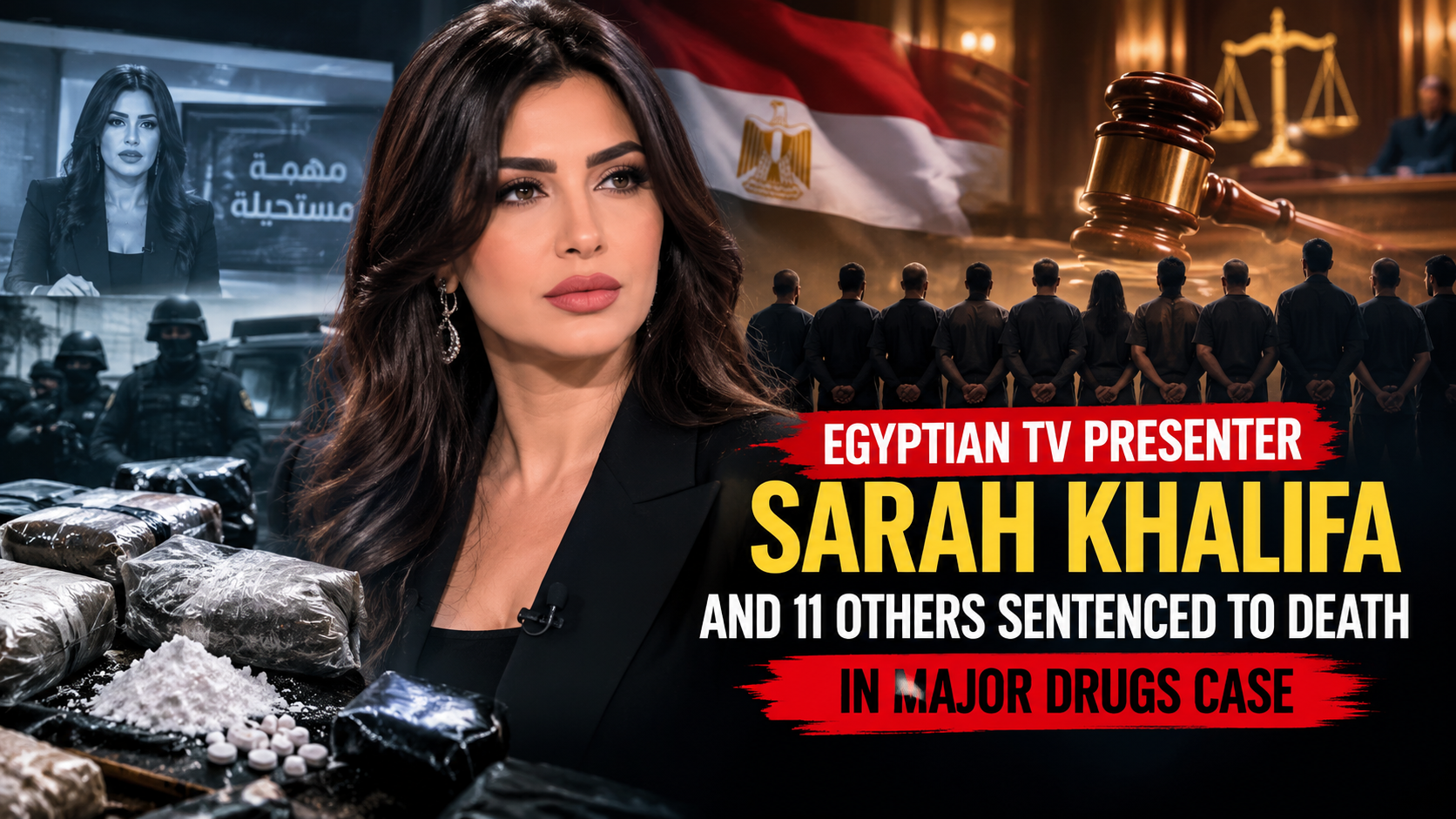
A dramatic court verdict in Egypt has placed television presenter Sarah Khalifa at the centre of one of the country’s most widely discussed criminal cases. Khalifa, known for presenting the crime and security-focused programme Mission Impossible, was sentenced to death alongside 11 other defendants after a Cairo criminal court found them guilty in a major case involving the alleged manufacture and trafficking of synthetic narcotics.
Who Is Sarah Khalifa?: Sarah Khalifa is a well-known Egyptian media personality and television presenter. Before the case brought her international attention, she had developed a public profile through television and other business activities.
The contrast between her public career and the serious criminal allegations has made the case particularly shocking for many people following the story. Khalifa has denied the accusations against her.
What Were the Charges?: According to reports from Egyptian and international media, prosecutors accused Khalifa and other defendants of participating in an organised criminal network involved in obtaining materials used to manufacture synthetic drugs and preparing the narcotics for trafficking.
The case also involved accusations relating to the possession of unlicensed firearms and ammunition. Investigators reportedly seized more than 750 kilograms of narcotics and related materials, while properties were allegedly used in connection with the production operation.
Why Were 12 People Sentenced to Death?: The Cairo Criminal Court sentenced Sarah Khalifa and 11 other defendants to death by hanging. The wider case involved 28 defendants.
According to reported court outcomes:
- 12 defendants received death sentences.
- 9 defendants received life imprisonment.
- 7 defendants were acquitted.
The prosecution’s case reportedly included witness testimony as well as technical and digital evidence.
Is the Death Sentence Final?: Importantly, the verdict does not necessarily mean that the executions will immediately take place.
Capital cases in Egypt go through further legal procedures, and the defendants have the right to appeal. The case also involved consultation with Egypt’s Grand Mufti, a procedural step required in capital punishment cases. The religious opinion itself is advisory, while the judicial process continues through the available appeal system.
Sarah Khalifa Maintains Her Innocence: One of the most significant elements of the story is that Khalifa has publicly denied involvement in the alleged drug operation. Reports state that she insisted she was innocent and disputed the allegations during the court proceedings.
This means the case is likely to remain under intense public and media attention as the legal process develops.
A Story That Has Shocked Egypt: The Sarah Khalifa case has attracted enormous attention because it combines several elements that naturally dominate public discussion: celebrity, television, organised crime allegations, drug trafficking and the death penalty.
For many observers, the case is also a reminder that a person’s public image and their legal circumstances can be dramatically different. However, it is equally important to remember that Khalifa’s conviction remains subject to the legal appeal process.
Final Thoughts: The sentencing of Egyptian television presenter Sarah Khalifa and 11 others represents one of the most striking criminal stories to emerge from Egypt in 2026. The allegations involve a large-scale organised operation, synthetic narcotics and serious weapons charges, while the court’s decision has placed the defendants at risk of the country’s harshest punishment.
Yet the story is not necessarily over. With appeals still available, the next stages of the Egyptian judicial process will be closely watched both inside the country and internationally.
The central fact remains: a Cairo court has sentenced Sarah Khalifa and 11 other defendants to death, but the verdict is subject to further legal challenge and appeal.