

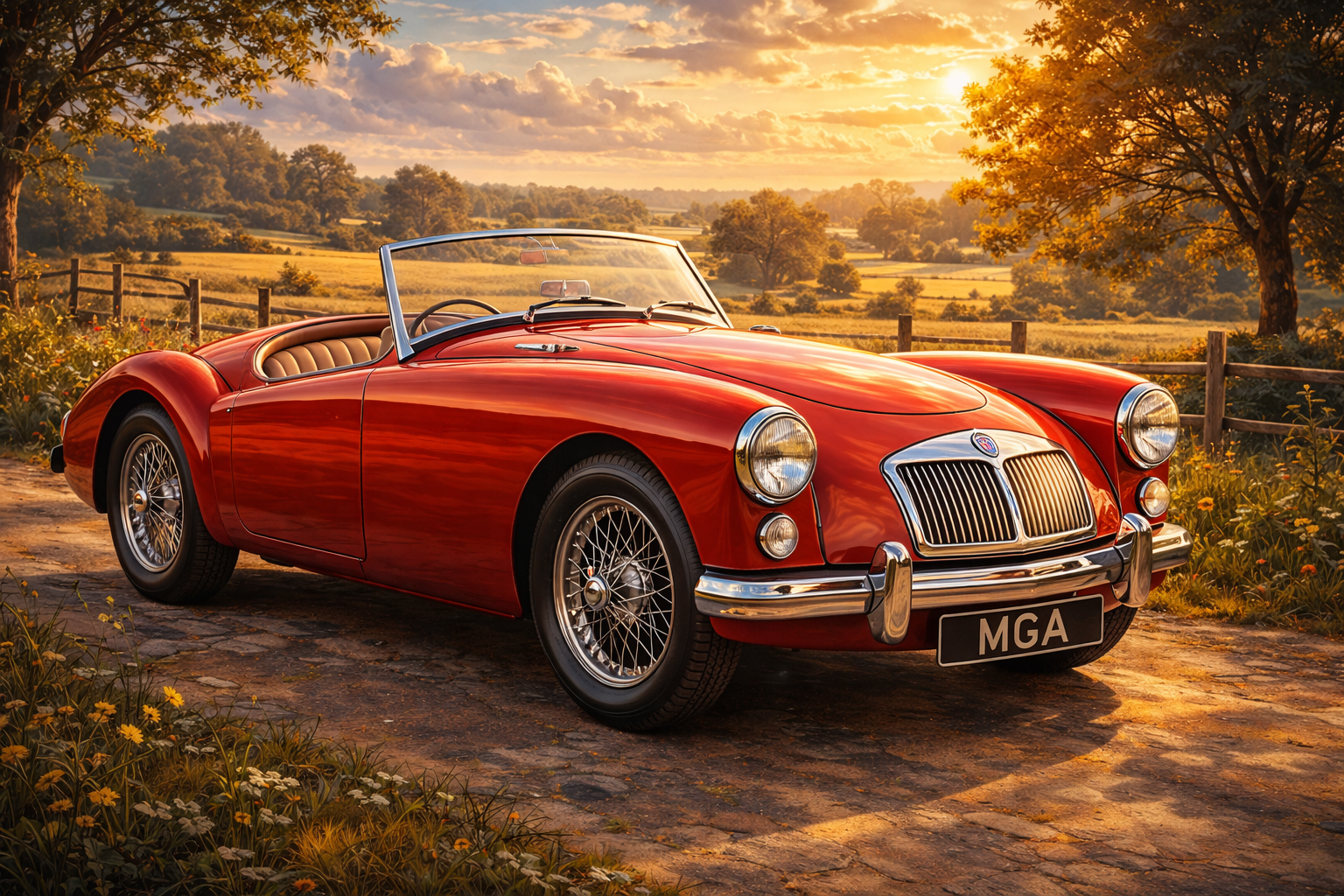
The MGA stands as one of the most celebrated British sports cars of the post-war motoring era. Produced between 1955 and 1962 by the iconic MG, the MGA marked a bold departure from the brand’s earlier pre-war styling. With its sleek, aerodynamic body and improved engineering, the car captured the spirit of 1950s British motoring and helped re-establish Britain’s reputation for affordable, stylish sports cars around the world.
History : During the early 1950s, MG’s existing models such as the MG T‑Series had begun to look outdated in comparison to newer European sports cars. Engineers at MG started developing a more modern design that would eventually become the MGA.
The car first gained attention when a prototype appeared at the famous 24 Hours of Le Mans in 1955. Although it did not win the race, the sleek design impressed observers and demonstrated the potential of MG’s new direction.
Later that same year, the production MGA was unveiled at the Frankfurt Motor Show. Unlike the upright and traditional MG models before it, the MGA featured a low-slung chassis, flowing wings, and a streamlined grille. The car quickly gained popularity, particularly in export markets such as the United States, where British sports cars were in high demand.
Over its production run, several variants were introduced, including the MGA Twin‑Cam, which featured a more powerful engine and advanced engineering for its time. By the end of production in 1962, more than 100,000 MGAs had been manufactured—an impressive achievement for a British sports car of that era.
Brief Overview : The MGA combined style, simplicity, and driving enjoyment. Its lightweight body and responsive handling made it an engaging car to drive on both country roads and race circuits. The design also represented a major step forward for MG, blending classic British craftsmanship with modern automotive innovation.
Even decades later, the MGA remains a favourite among classic car enthusiasts and collectors, often seen at vintage rallies and motoring events throughout Britain and beyond.
Conclusion : The MGA played a pivotal role in shaping the identity of post-war British sports cars. With its elegant styling, reliable performance, and international success, it helped establish MG as a global symbol of affordable motoring excitement. Today, the MGA continues to represent the charm and heritage of classic British automotive design, reminding enthusiasts of a golden age when simplicity and style defined the sports car experience. 🚗✨